This study investigates the propagation of higher-order solitons in lutetium aluminium garnet (Lu3Al5O12 or LuAG) doped with cerium (Ce3+), a material known for its unique nonlinear optical properties. Using the nonlinear Schrödinger equation (NSE), the authors analyse the soliton formation and stability within this medium, exploring both normal and anomalous dispersion regimes. Experimental observations confirm the first occurrence of higher-order optical solitons in Lu3Al5O12:Ce3+, highlighting the material potential for advanced photonic applications. The interplay between pulse duration, bandwidth, and material nonlinearities is examined to understand the dynamics governing soliton behaviour. The authors’ findings suggest that the exceptional optical characteristics of LuAG:Ce enable promising prospects for applications in optical communication, ultrafast lasers, and signal processing. The results emphasise the importance of ongoing research into soliton dynamics within this crystal, paving the way for innovative approaches in the development of next-generation photonic devices.
Introduction
Definition
Lutetium aluminium garnet (Lu3Al5O12 or LuAG) is a syn-thetic garnet crystal. LuAG is a synthetic crystalline material renowned for its exceptional scintillation properties and is widely used in various radiation detection applications. The research focused on obtaining a novel series of cerium (Ce3+)-doped LuAGs (Lu3Al5O12:Ce3+) through the solid-state reaction method. Additionally, these crystals exhibit good temperature properties [1].
LuAG is indeed a notable material in the realm of solid-state physics and material science, particularly for its scintillation properties and various applications in radiation detection. Let us delve deeper into the key features and significance of LuAG, especially when doped with Ce3+. LuAG is classified as a garnet crystal, which is a group of minerals characterised by a specific crystal structure. It is synthesised to achieve desirable optical and chemical properties, making it suitable for particular applications where natural garnets may not suffice or provide the required quality. This structure contributes to its good optical clarity and thermal stability, making it advantageous for various applications. LuAG is commonly used as a laser host material for solid-state lasers, particularly for neodymium-doped lasers. Its ability to efficiently convert pump light into laser emission makes it a popular choice in high-power laser applications. Due to its favourable optical properties, LuAG is used in various optical components, including lenses, windows, and filters. LuAG is also employed in scintillation detectors, where it acts as a scin-tillator material.
One of the standout features of LuAG is its scintillation capability, which means it can emit light (scintillate) when it absorbs high-energy radiation (such as gamma rays or X‑rays). This property makes LuAG particularly valuable in radiation detection technologies, medical imaging, and security applications. The introduction of Ce3+ ions into LuAG enhances its scintillation efficiency. Ce3+ is a well-known activator in scintillating materials, improving light output and adjusting the emission wavelength [2, 3].
In summary, Lu3Al5O12:Ce3+ or LuAG:C represents a versatile and high-performance scintillator with robust industrial and research applications. Its combination of excellent scintillation properties, temperature stability, and adaptability through doping makes it a significant material in the field of radiation detection and beyond. The development of novel garnet crystals, such as LuAG, is an exciting area of research with potential implications for both academia and industry [4].
Refraction index of Lu3Al5O12:Ce3+ glasses
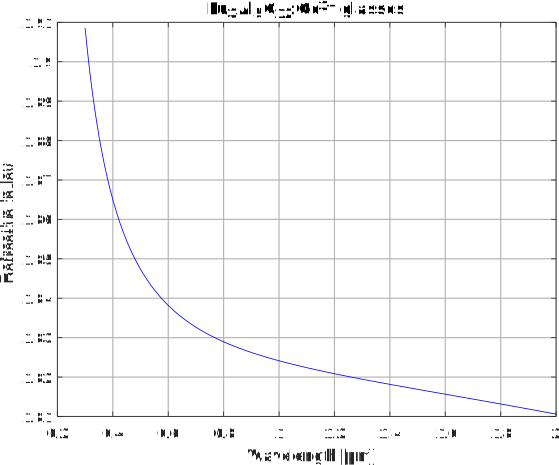
When light with high intensity propagates through a med-ium, it causes nonlinear effects. The Kerr effect is a significant phenomenon in nonlinear optics, enabling a wide range of applications across various fields. In high-intensity laser systems, the Kerr effect plays a critical role in generating short pulse durations. It can be described as a change in refractive index, as shown in Fig. 1, caused by electric fields and proportional to the square of the electric field strength [5]
The dispersion coefficient in optical fibres is a critical pa-rameter that affects the propagation of light signals. It quan-tifies how different wavelengths of light travel at different speeds through the fibre, leading to pulse broadening over distance [6]. There are several types of dispersion in optical fibres, primarily categorised into three groups: chromatic dispersion, modal dispersion, and polarisation mode dispersion. Their detailed explanation is presented in [7–9].
The overall dispersion coefficient of a fibre typically depends on the wavelength and is expressed as:
where D(λ) is the dispersion coefficient at wavelength λ, β is the propagation constant, and c is the speed light in vacuum.
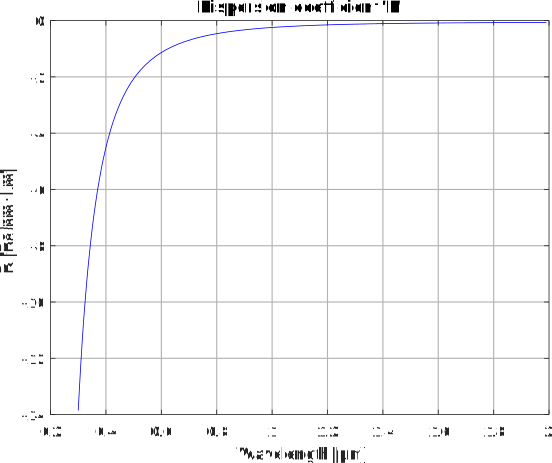
The dispersion coefficient in Fig. 2 essentially reflects how the speed of light in the fibre varies with wavelength, causing different wavelengths to arrive at different times, leading to pulse distortion. Modal dispersion occurs in multimode fibres, where light can take multiple paths (or modes) through the fibre. In high-speed fibre optic communication, especially over long distances, dispersion can lead to inter-symbol interference (ISI), where previ-ously transmitted pulses overlap with the current pulse, degrading the signal quality.
Fig. 2. Dispersion coefficient of Lu3Al5O12:Ce3+ glasses.
Understanding the dispersion coefficient and its impli-cations is vital for the design and optimisation of optical fibre systems. Selecting the appropriate fibre design and compensation techniques based on dispersion characteristics can result in enhanced performance in telecommunications and data transmission applications.
Soliton theory
Solitons are fascinating phenomena in nonlinear optics, playing a significant role in pulse compression. Solitons are indeed remarkable phenomena in nonlinear optics, characterised by their ability to maintain shape while travelling at constant velocities, even in the presence of nonlinear effects [10]. Pulse compression methods leverag-ing solitons typically involve the use of nonlinear fibre optics. In such systems, the interplay between the nonlinear refractive index and the dispersive properties of the fibre allows for the shortening of optical pulse durations. The nonlinear Schrödinger equation (NSE) is used to analyse pulse propagation in nonlinear media, where soliton solutions can be obtained under certain conditions [11].
Nonlinear pulse compression using high-intensity femtosecond pulses is indeed an exciting area of research, particularly when employing gas-filled hollow fibres or capillaries. The propagation of high-intensity femtosecond pulses through nonlinear media like gases leads to substan-tial changes in the medium refractive index due to intensity-dependent effects. This interplay gives rise to a range of nonlinear phenomena, including self-focusing, self-phase modulation, and even plasma generation, each of which holds significant potential for various applications in laser technology, spectroscopy, and materials science. Under-standing these nonlinear interactions enhances our ability to harness light in innovative ways for advanced technolo-gies. The dispersion characteristics can be fine-tuned by adjusting pressure, length, and type of gas in the fibre. After spectral broadening, various techniques can employ prism or grating-based dispersive delay lines to compress the pulse back into a shorter duration. The following equation is used to study soliton pulses, compression, propagation, disper-sion, etc.:
where U(ξ, t) is the slowly varying amplitude function of the pulse,(3) χ is the third order susceptibility, n2 is the non-linear refractive index, Aeff is the effective area, γ is the nonlinear coefficient, τ is the pulse duration, T is the period, z is the propagation distance, vg is the group velocity, P0 is the pulse power, β2 is the second-order dispersion, β3 is the third-order dispersion, LD is the length dispersion, LNL is the nonlinear length dispersion, ξ is the normalised distance, N is the soliton number.
Fundamental soliton
The first-order soliton (N = 1) corresponds to the case of a single eigenvalue. The general form of the fundamental soliton for a nonlinear wave equation, such as the NSE, can be expressed as:
\(
U(\xi, \tau)=\operatorname{sech}(\tau) \exp (i \xi / 2)
\) (4)
The solution in (4) can also be obtained by solving the NSE directly.
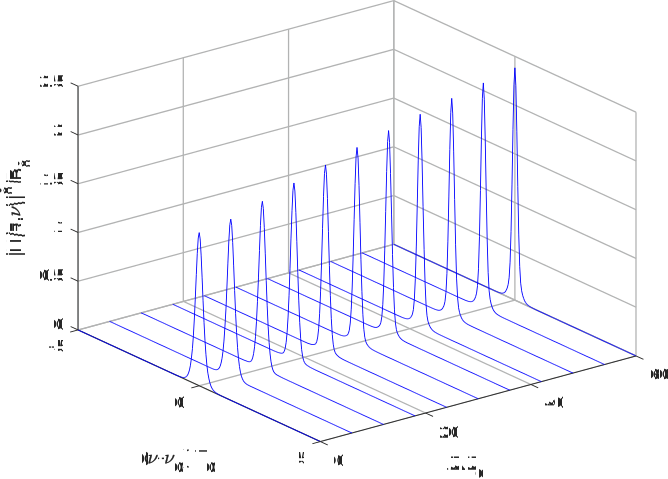
In the case of a fundamental soliton (N = 1), self-phase modulation (SPM) occurs due to the intensity-dependent refractive index of the fibre material. As the peak intensity of the pulse increases, the refractive index also increases, leading to a phenomenon where higher intensity parts of the pulse experience a different phase shift than the lower intensity parts seen in Fig. 3.
Fig. 3. First soliton propagation in Lu3Al5O12:Ce3+.
In an optical fibre, when a pulse travels through the medium, SPM tends to broaden the pulse spectrum due to the intensity-dependent refractive index. At the same time, a group velocity dispersion (GVD) acts to spread the pulse in time
SPM initially enhances nonlinearity, leading to effective pulse compression and increased peak power. However, as the pulse propagates, GVD begins to play a significant role, which can mitigate the effects of SPM and potentially lead to pulse breaking or fission into fundamental solitons. The peak power P0 required to support the fundamental soliton is obtained by setting N = 1and is given by:
The ability to create these solitons by adjusting initial conditions or medium parameters allows for greater flexibility in applications. Moreover, their complex interac-tions, such as collisions and phase shifts, can facilitate advanced techniques in pulse compression, making them valuable in various fields, such as telecommunications and laser technology. By managing these interactions effec-tively, it is possible to achieve more focused and efficient pulse shapes, which are essential for improving data transmission rates and overall system performance [12]. Higher-order solitons (6), which are solitons that have more complex structures with multiple peaks rather than a single peak, exhibit distinctive behaviours due to the interplay of dispersion and nonlinearity in the medium:
where U(0, τ) is the initial soliton pulse with the chirp C.
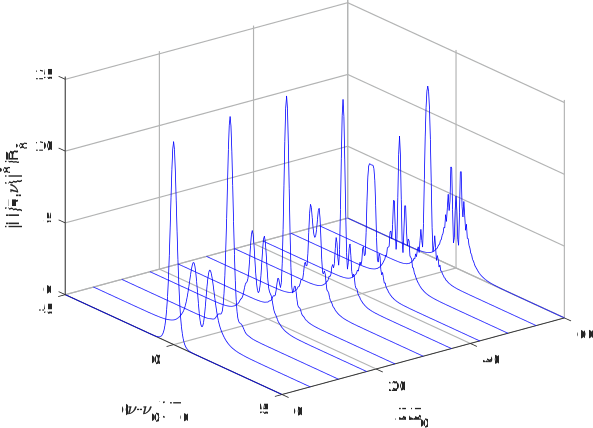
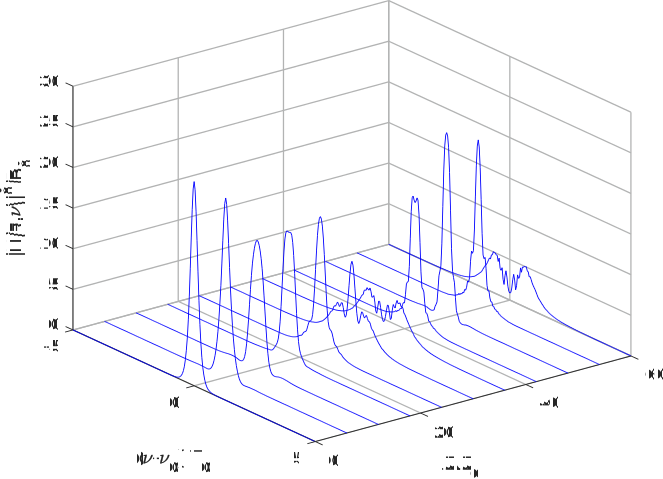
Higher-order solitons can give rise to harmonic frequencies in their spectra due to their complex structure. For higher-order solitons in Fig. 4, the periodic changes observed in both spectra and pulse profiles can lead to an oscillatory behaviour.
Fig. 4. Temporal evolution over one soliton period for the thirdorder
soliton propagation in Lu3Al5O12:Ce3+.
The frequency chirp generated by SPM creates a balance that counteracts the effects of dispersion, allowing solitons to maintain their shape and stability over long distances. The resulting spectral changes from this interplay produce a bipolar spectrum, characterised by regions of red-shifted and blue-shifted frequencies
The qualitative features arising from the interplay between GVD and SPM deeply influence optical pulse behaviour in fibres. However, by intelligently using the effects of both GVD and SPM, it is possible to achieve pulse compression. As the soliton propagates, the interplay between GVD and SPM allows the pulse to conserve its energy. Such solitons maintain their shape and speed, even as they travel through the fibre, thanks to the interplay that dynamically adjusts the pulse width and peak power.
Periodic evolution of the fourth-order soliton over one soliton period is shown in Fig. 5. The most notable feature of Fig. 5 is that SPM-induced spectral broadening is accompanied by an oscillatory structure covering the entire frequency range. In general, the spectrum consists of many peaks, and the outermost peaks are the most intense. The number of peaks depends on θmax and increases linearly with it.
Fig. 5.Spectral evolution over one soliton period for the fourthorder
soliton propagation in Lu3Al5O12:Ce3+.
The initial frequency chirp refers to the temporal gradient of the frequency within the pulse. This can impact how the pulse evolves as it propagates through a nonlinear medium. The initial frequency chirp is a crucial parameter in the formation of solitons. The interplay between this chirp, dispersion, and nonlinearity must be carefully managed to ensure successful soliton generation and trans-mission [13–15].
When an additional chirp is introduced to a soliton pulse, it can superimpose onto the SPM-induced chirp. This interference can disrupt the intended spectral and temporal properties of the soliton, resulting in alterations to its shape and velocity. Solitons rely on the careful balance between GVD (which tends to spread the pulse) and SPM (which tends to compress the pulse). By applying pre-chirping methods, one can tailor the initial conditions of the pulse to account for expected distortions during propagation. Implementing fibres with varying dispersion properties along the propagation path can help adapt to any introduced chirp, allowing a more efficient balance between GVD and SPM [16].
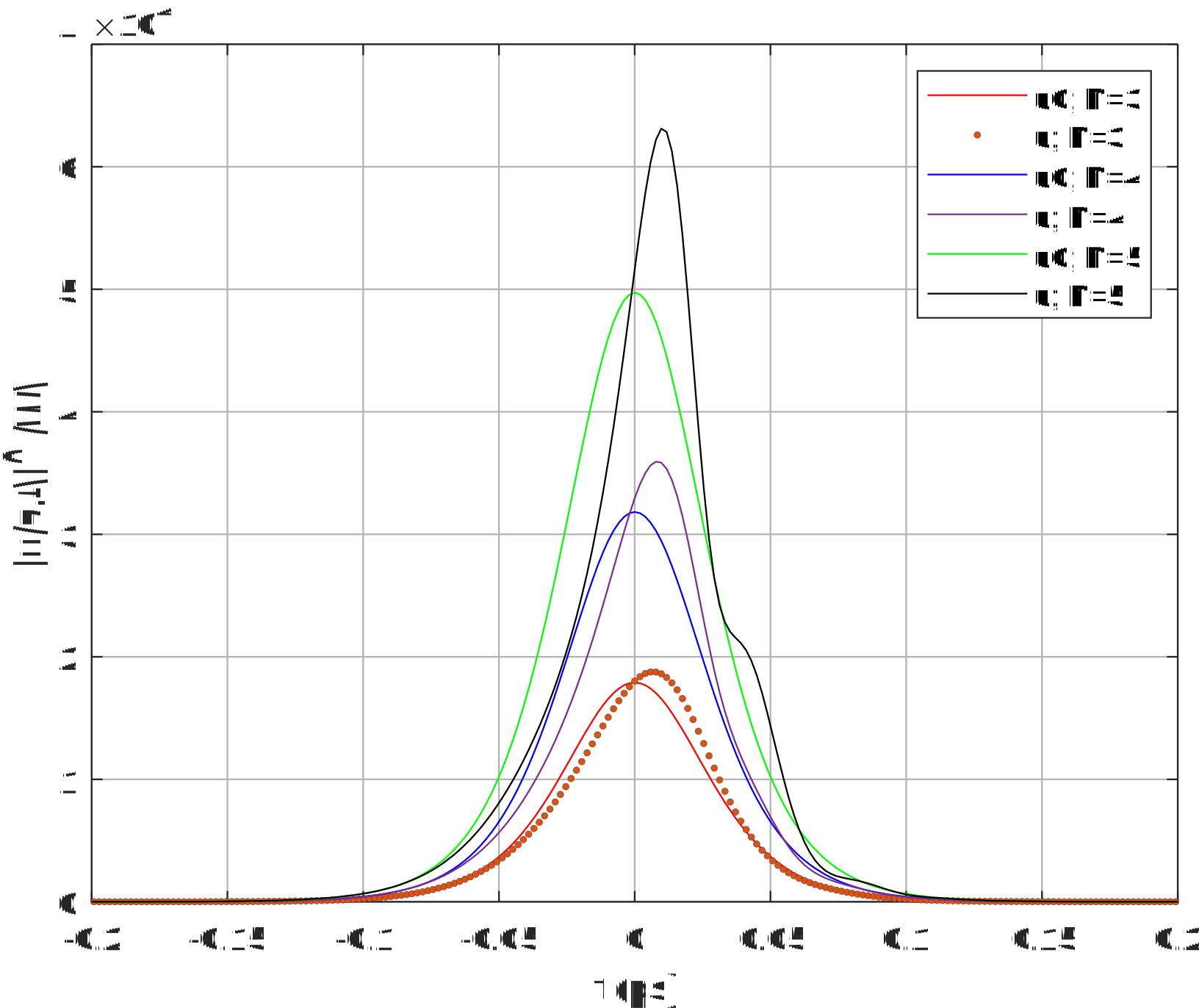
In Fig. 6, soliton pulses, u0 = 35 fs propagating through 1 m of glass exhibit a new phenomenon known as self-steepening for all cases (N = 3, 4, and 5). The pulse with N = 4 is deemed the most favourable because it demonstrates an increase in energy without significant alteration. The N = 5 case, while also effective, experiences some changes that are not present in N = 4. The N = 3 case shows a decrease in energy compared to N = 4 , indicating that lower orders may not be optimal under these conditions [17, 18].
Fig. 6.Higher-order soliton (N = 3, 4 and 5) propagation in 1 m
of Lu3Al5O12:Ce3+. u0 = 35 fs is the initial soliton pulse
and u is the output soliton pulse.
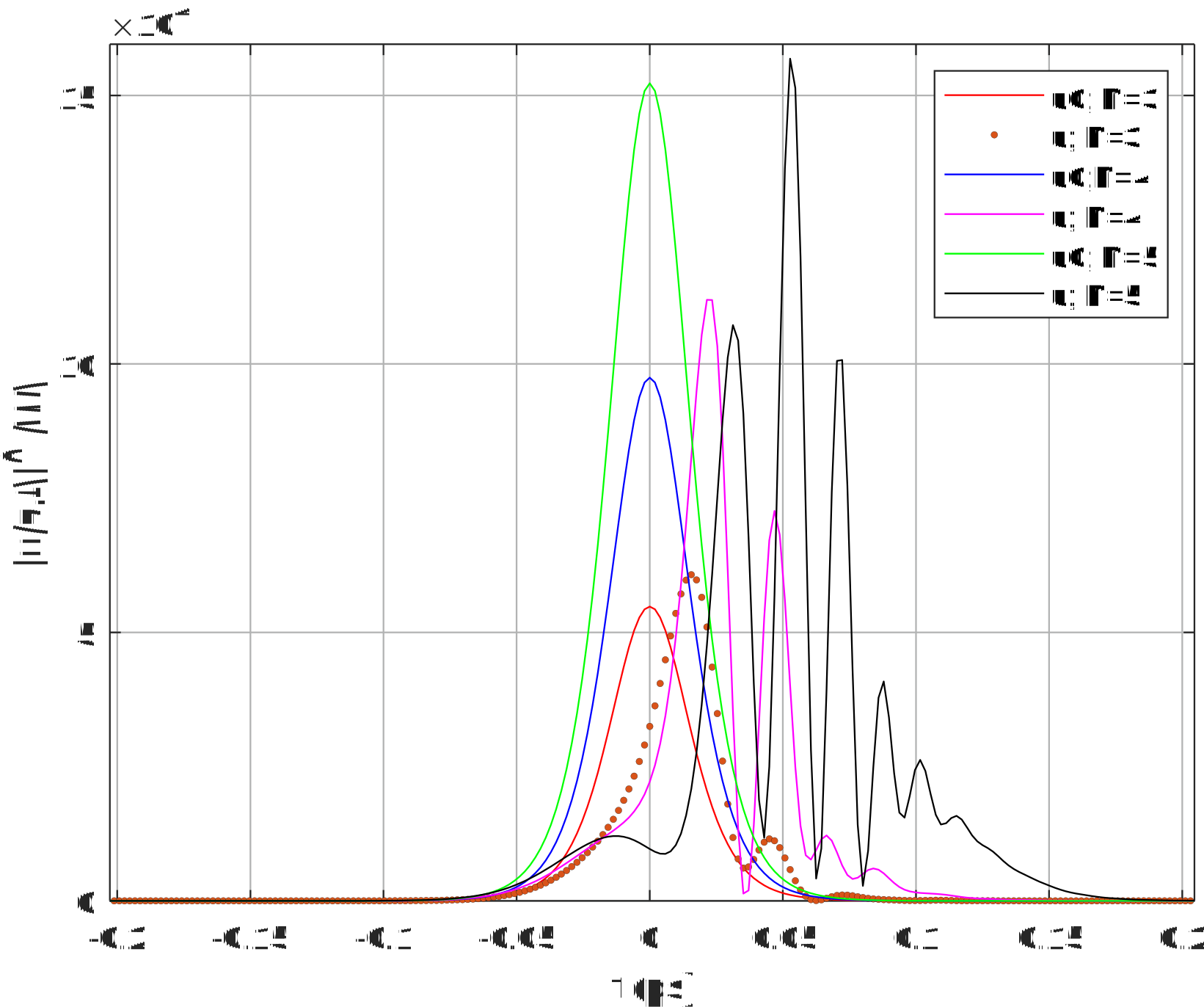
Fig. 7 shows the effect of a shorter pulse width (u0 = 20 fs). When the pulse width is reduced to 20 fs, oscillations occur in the soliton pulse for all orders. This suggests that ultrashort pulses challenge the stability of the soliton, making it difficult for them to maintain their shape over the given distance.
Fig. 7.Higher-order soliton (N = 3, 4 and 5) propagation in 1 m
of Lu3Al5O12:Ce3+. u0 = 20 fs is the initial soliton pulse
and u is the output soliton pulse.
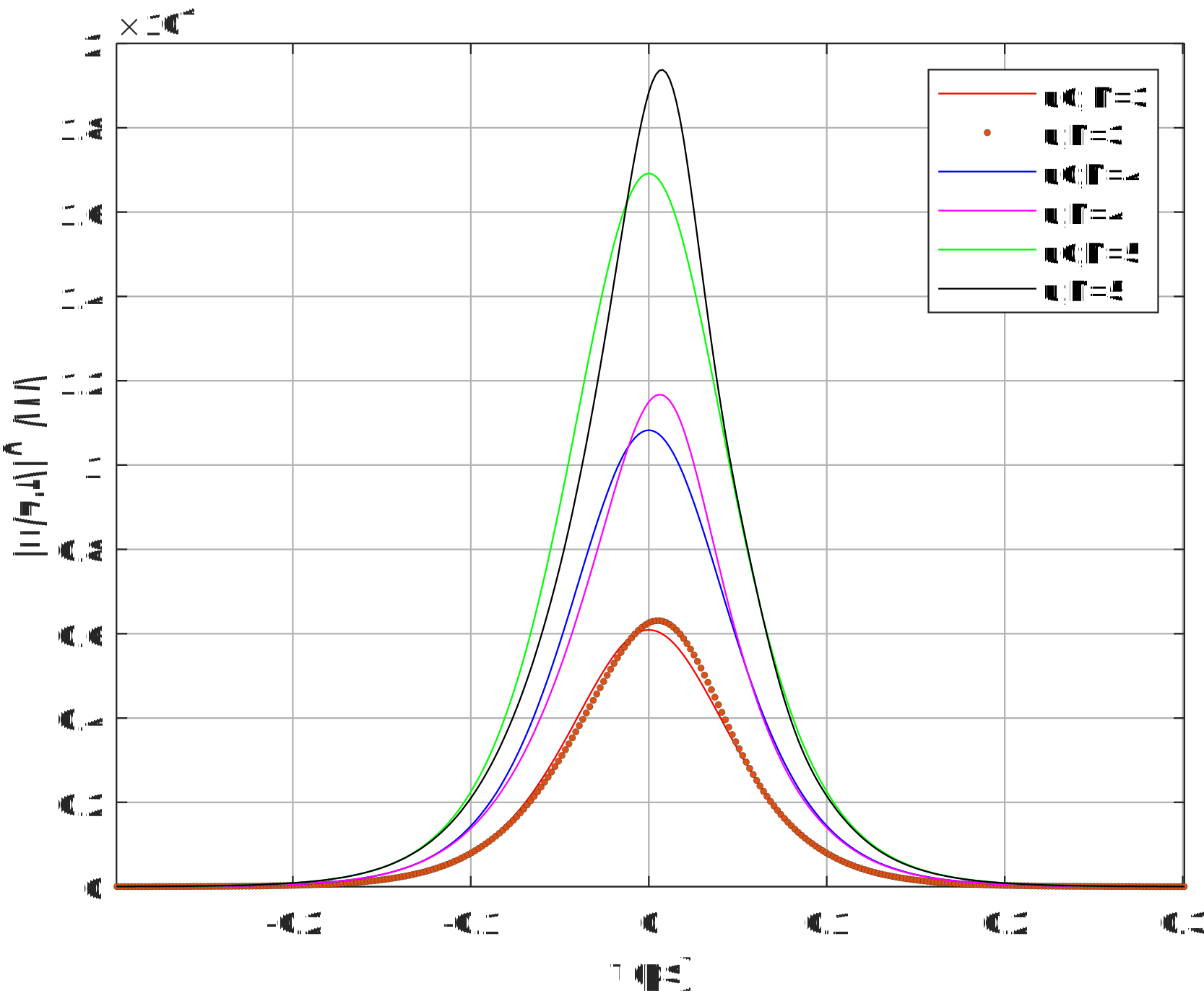
Fig. 8 shows the longer pulse width (u0 = 60 fs) and extended propagation. At a longer pulse width of 60 fs and a propagation distance of 2 m, the soliton pulse remains stable without any alteration or perturbation. In this scenario, the N = 5 case is again noted as the most effective, as it exhibits higher energy and a compressed duration compared to N = 3 and N = 4. This indicates that at longer pulse widths, higher-order solitons can effectively maintain stability while providing greater energy [19].
Fig. 8.Higher-order soliton (N = 3, 4 and 5) propagation in 2 m
of Lu3Al5O12:Ce3+. u0 = 60 fs is the initial soliton pulse
and u is the output soliton pulse.
The propagation process involves a complex interplay between pulse width, soliton order, and stability during the propagation process. As the pulse width increases, the soliton can better maintain its integrity and energy, while ultrashort pulses introduce complexity and instability. This information is valuable for applications in optical communications and nonlinear optics, where soliton behaviour plays a critical role.
Indeed, the effects of undesirable dispersive waves in nonlinear optical systems can significantly impact the performance of soliton communication systems. Dispersive waves can dissipate energy from the primary soliton pulse, leading to a reduction in its peak power. When a soliton interacts with dispersive waves, particularly in cases where the input pulse has a nonlinear coefficient (N) close to one, it can cause spectral modulation. The interference from dispersive waves can lead to temporal spreading of the pulse, affecting the time slots allocated for data transmis-sion. The interaction with dispersive waves can modify key characteristics of the soliton, such as its amplitude, width, and velocity. Experimental findings have confirmed that dispersive wave interactions can indeed introduce modula-tions in the pulse spectrum, which complicates the dynamics of soliton propagation and can result in unwanted sidebands in the spectrum [14–16].
Solitons are self-reinforcing solitary waves that maintain their shape while travelling at constant speed. They arise in nonlinear media where a balance between nonlinearity and dispersion exists. In the context of optical fibres and crystals like Lu3Al5O12:Ce3+, solitons can be generated under specific conditions, leading to stable and controllable optical phenomena.
The strong nonlinear response of Lu3Al5O12:Ce3+ makes it a candidate for studying soliton dynamics. Solitons are stable wave packets that can maintain their shape over long distances, which is crucial for high-speed data transmission.
Conclusions
Lu3Al5O12:Ce3+ is a promising material in optics and photonics, particularly due to its excellent nonlinear optical properties and broad range of applications. Ongoing research into its behaviour, especially regarding soliton dynamics, holds the potential to unlock new technologies in telecommunications, imaging, and laser systems. Soliton pulse propagation in Lu3Al5O12 doped with cerium (Ce3+) is an intriguing area of study within nonlinear optics.
The study of soliton pulse propagation in Lu3Al5O12:Ce3+ opens new avenues for research and application in nonlinear optics. The unique properties of this material, combined with the robust nature of solitons, have significant implications for advancing technologies in telecommunications, lasers, and beyond. Further exploration of this topic will continue to uncover the potential of solitons in enhancing optical systems performance. Research has shown the potential for generating higher-order solitons in this material, resulting in enhanced stability and unique propagation characteristics.
As solitons travel through nonlinear media, they can influence or trigger various nonlinear optical phenomena, including supercontinuum generation, self-frequency shift-ing, and creation of new wavelengths. This has implications in spectroscopy, medical imaging, and frequency conversion applications. The study of solitons extends to new fields such as quantum optics and photonic circuits, where the ability to manipulate light at the quantum level is paramount. Solitons can be used in quantum information processing and as carriers of quantum bits (qubits) in quantum communication systems.
In summary, solitons represent a powerful tool for manipulating light and pulse dynamics, enabling precise control over pulse duration and shape, which is essential for advancing technologies in ultrafast optics and beyond. The exploration of soliton behaviour in various nonlinear media continues to drive innovation, paving the way for new appli-cations and enhanced capabilities in optical technologies.
Propagation of pulses in a medium is a critical topic for this journal as it plays a vital role in the fields of electronics and microelectronics. Ultrashort laser pulses, in particular, have a wide range of applications in microelectronics and semiconductors, including diodes, photodiodes, modulators, amplifiers, filters, attenuators, and optical fibres. Conse-quently, the optics and spectroscopy journal provides diverse and enriching content on these subjects.
Understanding the dynamics of how ultrashort laser pulses interact with various materials is essential for advancing current technologies. The intricate relationship between pulse duration, bandwidth, and material response can drive innovations in optical communication and signal processing. Techniques such as pulse shaping and compres-sion are particularly pivotal for enhancing the performance of devices that rely on precise timing and signal integrity.
Conflict of interest
The authors declare that there are no known competing financial interests or personal relationships that could influence the work reported in this study. Additionally, the research was conducted with a commitment to integrity and transparency, ensuring that all methods and results are presented objectively. The authors adhered to established ethical standards throughout the study, thus guaranteeing the accuracy and replicability of the findings.
All potential conflicts of interest have been disclosed and funding sources have been acknowledged to uphold the credibility of the research. This unwavering commitment to impartiality and rigor is crucial in maintaining the trust of both the scientific community and the public regarding the validity of the work presented.
References
Michail, C. et al. Spectral efficiency of lutetium aluminum garnet (Lu3Al5O12:Ce) with microelectronic optical sensors. Microelectron. Reliab. 109, 113658 (2020). https://doi.org/10.1016/j.microrel.2020.113658
Akhrib, Z. et al. Lithium ion codoping effect on structural, morpho- logical and photoluminescence spectroscopy of Lu3Al5O12: Ce3+ garnet powder material synthetized by sol gel method. Opt. Mater. 157, 116329 (2024). https://doi.org/10.1016/j.optmat.2024.116329
Gallo, S., Veronese, I., Vedda, A. & Fasoli, M. Evidence of optically stimulated luminescence in Lu3Al5O12:Ce. Phys. Status Solidi A 216, 1900193 (2019). https://doi.org/10.1002/pssa.20190010
Stolen, R. H & Ashkin, A. Optical Kerr effect in glass waveguide.Appl. Phys. Lett. 22, 294–296 (1973). https://doi.org/10.1063/1.1654644
Sheik-Bahae, M et al. Dispersion and band-gap scaling of the electronic Kerr effect in solids associated with two-photon absorption. Phys. Rev. Lett. 65, 96 (1990). https://doi.org.10.1103/PhysRevLett.65.96
Martínez, O. E., Gordon, J. P. & Fork, R. L. Negative group‑velocity dispersion using refraction. J. Opt. Soc. Am. A 1, 1003–1006 (1984). https://doi.org/10.1364/JOSAA.1.001003
Weber, M. J., Milam, D. & Smith, W. L. Nonlinear refractive index of glasses and crystals. Opt. Eng. 17, 175463 (1978). https://doi.org/10.1117/12.7972266
Chernikov, S. V. & Mamyshev, P. V. Femtosecond soliton propagation in fibers with slowly decreasing dispersion. J. Opt. Soc. Am. B 8, 1633–1641 (1991).https://doi.org/10.1364/JOSAB.8.001633
Meinel, R. Generation of chirped pulses in optical fibers suitable for an effective pulse compression. Opt. Commun. 47, 343–346 (1983). https://doi.org/10.1016/0030-4018(83)90042-1
Lazaridis, P., Debarge, G. & Gallion, P. Optimum conditions for soliton launching from chirped sech2 pulses. Opt. Lett. 20, 1680– 1682 (1995). https://doi.org/10.1364/OL.20.001680
Agrawal, G. P. Fiber-Optic Communication Systems, 2nd ed. Ch. 10 (Wiley, New York, 2002).
Khelladi, M., Seddiki, O. & Bendimerad. F. T. Nonlinear effect of an ultrashort laser pulse propagation in Ti:Sapphire Crystal. J. Comput. Theor. Nanosci. 6, 1640–1645 (2009). https://doi.org/10.1166/jctn.2009.1224
Khelladi. M. Propagation pulse laser picoseconds in zirconium barium lanthanum aliminium sodium fiber. J. Comput. Theor. Nanosci. 9, 731–736 (2012). https://doi.org/10.1166/jctn.2012.2087