Distributed acoustic sensing (DAS) based on Rayleigh backscattering is actively used for perimeter monitoring of critical infrastructure. However, traditional signal processing methods often face challenges in detecting weak or short-term events in noisy conditions. In this paper, we propose an improved signal accumulation method based on group averaging with alternating sign integration. The proposed method provides the efficient noise suppression and improves the detection of local mechanical disturbances along the fibre. Comparative simulation study between the classical and the proposed approach demonstrates a significant improvement in signal visibility in the presence of additive noise. Potential implementations of multi-layered and mesh-integrated DAS configurations are also discussed to further enhance signal-to-noise ratio (SNR). The obtained results can serve as a basis for the development of modern security systems for critical facilities.
Introduction
Distributed acoustic sensing (DAS) based on a phase-optical time domain reflectometry (OTDR) interrogation of Rayleigh backscattered light has become an indispensable tool for perimeter security, structural-health diagnostics, and geophysical monitoring across a broad variety of infrastruc-tures [1, 2]. By turning a single optical fibre into a kilometre-scale, continuously sampled sensor array, DAS offers immunity to electromagnetic interference, wide spatial coverage, and straightforward deployment in both urban and remote environments [3, 4].
Beyond DAS, optical fibres support several other distributed sensing modalities, including Raman-based distributed temperature sensing (DTS), Brillouin-based distributed strain and temperature sensing (DTSS), and multiplexed arrays of fibre Bragg gratings (FBGs); together, these techniques illustrate the versatility of fibre-optic infra-structures for quasi-continuous environmental monitoring.
Nevertheless, the ultimate strain signal-to-noise ratio (SNR) of phase-OTDR DAS is fundamentally limited by the stochastic nature of Rayleigh backscatter and by accu-mulated phase noise [5]. Conventional differential-phase processing therefore struggles whenever vibration amplitudes approach this noise floor: short-lived or weak mechanical events become masked by background fluctuations, reducing detection probability and inflating false-positive rates [6, 7]. Numerous upgrades – artificial-intelligence (AI) classifiers [6], adaptive filtering [8], coherent detection schemes [3] – have been explored, yet the trade-off between SNR, spatial resolution, and computa-tional cost remains unresolved [9, 10].
Demand for more robust processing has intensified as DAS expands into subsurface imaging [7], seismology [11], high-resolution geophysical profiling [12], and environmen-tal sensing [13, 14]. Recent studies emphasise algorithms that sustain reliable operation at low SNR without hardware modification [15, 16], pushing the detectable strain toward the sub-nanostrain limit predicted in [5].
In response to this need, a group-averaging algorithm with group alternating-sign integration (GAI) that improves DAS SNR by up to 12 dB in simulation while preserving native spatial resolution has been introduced. The method is compatible with existing DAS hardware and can be executed in real-time on standard field-programmable gate array /digital signal processor (FPGA/DSP) platforms. The remainder of the paper is organised as follows: section 2 outlines the optical architecture and signal model that support the subsequent analysis, section 3 details the proposed GAI algorithm, section 4 describes the simulation framework, section 5 presents and discusses the results, and section 6 concludes the work and highlights future research directions, including multi-loop and networked DAS configurations.
DAS architecture and signal model
Section 2 presents both the logical signal-processing flow and the corresponding hardware realisation of the studied DAS. Fig. 1 outlines the conceptual data path of a phase-OTDR DAS − from pulse generation to differential-phase decision logic − while Fig. 2 details the physical implementation used in this work.
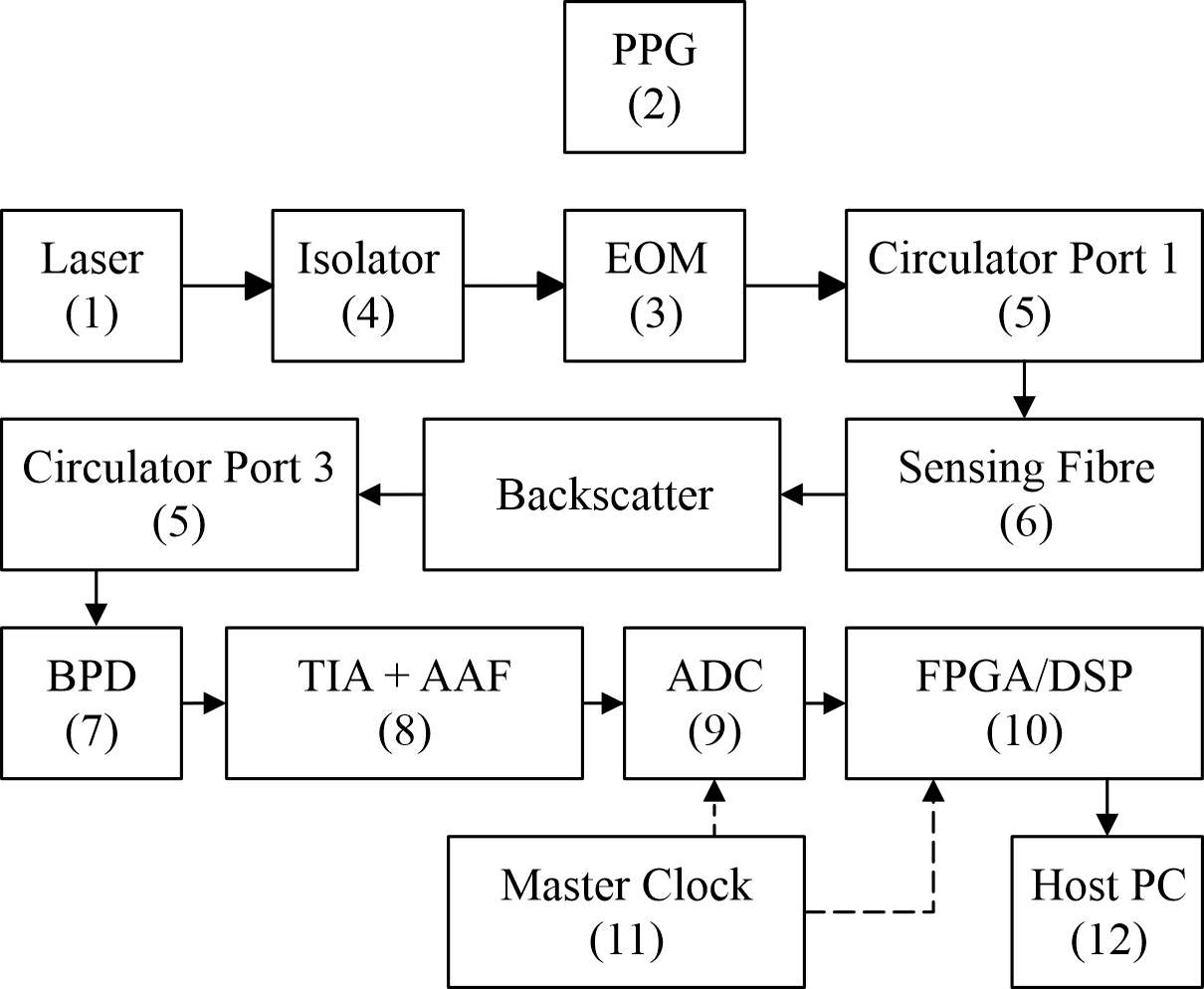
Fig. 2.Schematic diagram of the experimental DAS setup implementing the proposed GAI algorithm. Solid arrows indicate optical or data-signal flow, whereas dashed arrows denote timing and synchronisation lines.
The accuracy and applicability of DAS are governed not only by an optical hardware but equally by a signal-processing chain that converts noisy Rayleigh backscatter traces into reliable vibration and strain information. This section, therefore, summarises the optical layout of a classical phase-OTDR DAS; reviews the conventional signal model and differential-phase processing workflow; highlights performance bottlenecks that motivate the enhanced algorithm introduced in section 3.
Optical architecture and hardware schematic
The system studied in this work adopts the classical single-ended phase-OTDR layout based on Rayleigh back-scattering (Fig. 2). Its key components are a narrow-linewidth pulsed laser, a three-port optical circulator, a sensing single-mode fibre, and a balanced photo-detector. The laser launches short optical pulses into the fibre; microscopic index inhomogeneities generate dis-tributed Rayleigh scatter and the circulator redirects the back‑scattered light to the detector, where it is digitised for further processing.
The round-trip time of each pulse determines the spatial coordinate along the fibre. In contrast, the phase evolution between successive pulses encodes external mechanical perturbations such as vibration or dynamic strain [1, 3, 6]. This principle allows DAS to operate as a continuous linear sensor without embedded transducer elements. Recent advances have explored enhanced coherent detection [7], long-range operation via distributed amplification [16], and multiplexed DAS networks [11]. Regardless of these hardware variations, practical performance ultimately hinges on robust signal interpretation.
A temperature-stabilised distributed feedback (DFB) laser (1) feeds an electro-optic modulator (EOM) (3) driven by a pulse-pattern generator (PPG) (2) to produce 10 ns optical pulses. The pulses are launched through an optical isolator (4) into port 1 of a three-port circulator (5) and propagate along a 5 km sensing fibre (6). Rayleigh-backscattered light returns to port 3 of the circulator and is detected by a balanced photodetector (BPD) (7) followed by a trans-impedance amplifier (TIA) and an anti-alias filter (AAF) (8). The electrical signal is digitised by a 14‑bit 250 MSa/s analogue-to-digital converter (ADC) (9) whose sampling clock is phase-locked to the trigger from the pulse generator via a master-clock synthesiser (11). A FPGA/DSP board (10) performs real-time GAI processing and streams processed traces to a host PC (12) for storage and visualisation.
The proposed method is fully implemented in the DSP
block, allowing seamless integration into existing DAS platforms. Unlike some approaches that rely on advanced photonics or neural networks [6, 8, 13], the presented tech-nique offers a low-complexity upgrade path for commercial systems while maintaining scalability and performance.
Signal modelling in classical DAS
For numerical simulation, the sensing fibre is represented as a one-dimensional chain of Rayleigh scatterers, each characterised by its position and reflection coefficient. External disturbances are modelled as local, time-dependent phase shifts imposed on the backscattered signal. Additive white Gaussian noise (AWGN) is injected to emulate thermal, electronic, and environmental fluctua-tions [4, 10].
The classical processing chain computes the differential phase either between adjacent scattering centres or between successive pulses observed at the same location [3]. Although computationally efficient, this approach becomes unreliable when event-induced phase excursions approach the noise floor: weak or short-lived disturbances are then masked and both missed detections and false alarms proliferate. Prior studies have addressed this challenge with machine-learning pattern recognition [6], spectral decomposition [13], and multiscale correlation analysis [15]. Yet these techniques often require extensive post-processing resources or large training data sets. Conse-quently, there remains a need for a simple but effective scheme that increases noise tolerance while preserving intrinsic spatial resolution – an objective that motivates the group-accumulation method introduced below
GAI algorithm
To overcome the limitations of classical phase-differential processing in noisy environments, a novel signal accumula-tion technique was introduced based on grouped averaging with alternating sign integration. The method is designed to suppress uncorrelated noise and improve the visibility of localised mechanical disturbances along the sensing fibre.
The technique involves grouping the backscattered phase signals into non-overlapping blocks of M consecutive pulses. Each block is averaged to smooth out random fluctuations, and the averaged signals are then combined using alternating signs. This integration strategy enables constructive amplification of local disturbances while destructively cancelling quasi-stationary noise components. Correlation-based optical processing has long been used to enhance contrast and reveal subtle features in low-contrast speckle patterns [17]. Inspired by these principles, the proposed GAI method cumulatively integrates alternate sign windows, effectively acting as a tailored correlation filter for phase-OTDR traces.
The key innovation of this study lies in the development of an advanced signal accumulation methodology tailored for DAS systems. The method is designed to enhance the detectability of localised mechanical events, particularly in conditions of high background noise and low-SNR. Unlike conventional differential-phase approaches, whose SNR is often limited to uncorrelated noise, the proposed method introduces a structured accumulation strategy. This strategy utilises group averaging with alternating-sign integration to suppress random fluctuations while preserving spatial resolution. The following sections describe the mathematical formulation, algorithmic implementation, and architectural adaptability of the proposed method, demonstrating its effectiveness through numerical simulations and compara-tive performance analyses.
Motivation and mathematical basis
Conventional DAS systems rely on the calculation of the differential phase between successive backscattered optical signals to detect external disturbances. While this method works well in moderate noise conditions, it becomes unreliable when applied to weak, short-term, or spatially limited events. The problem is further exacerbated in applications involving long-distance sensing, urban infrastructure, or low-SNR conditions [6, 7, 11].
The random nature of Rayleigh scattering, along with environmental noise and system imperfections, often masks meaningful signals. Although modern approaches such as machine learning and AI-based classification can assist in some scenarios [6, 7], they require substantial data and computational resources. Other solutions, such as ad-vanced optical topologies or surface-based DAS configura-tions [12] offer higher resolution but come at the cost of increased complexity.
Thus, there is a need for a lightweight yet effective solution for signal processing – one that enhances detection reliability without sacrificing resolution or requiring equip-ment upgrades. This paper presents such a solution through an improved accumulation method, focusing on noise suppression, event localisation, and practical feasibility
The mathematical formulation of the accumulated signal Sk is given by:
where ⟨Δϕ〉M ddenotes the averaged phase difference within the k-th block. The averaging operator ⟨Δϕ〉M is imple-mented as a rectangular (boxcar) moving-average window that spans M consecutive phase samples and is normalised by 1/M. Alternative kernels (triangular and Hanning) were evaluated but gave no measurable SNR advantage while increasing computational complexity; hence, the rectangular window was retained for real-time implementation.
The method exhibits the following benefits:
Noise robustness: efficient suppression of uncorrelated background noise.
Preserved resolution: localisation accuracy is main-tained despite temporal averaging.
Low computational complexity: this approach is well-suited for real-time applications, including long-haul DAS and multi-channel systems. Numerous upgrades have been examined, including AI-based detection schemes [6, 7], adaptive filtering [8], coherent detection [3], and multi-channel DAS architectures [11, 12, 15]; nevertheless, the trade-off between detection accuracy and computational complexity remains unresolved.
Optimal performance was achieved at M = 10, which balances the improvement in SNR with the sensitivity to event duration. Even values of M are recommended to ensure symmetric cancellation of stationary components, as supported by confirmed simulations including parameter tuning synthetic data analysis [14].
The proposed accumulation method is mathematically defined by grouping sequences of backscattered phase signals into blocks of size M, averaging them, and combining the results using alternating-sign integration. This reduces the impact of low-frequency background fluctuations while simultaneously enhancing the visibility of rapid phase disturbances. The rationale behind alternating-sign integration is rooted in the orthogonality of the signal and the theory of statistical averaging, as explored in recent research on DAS optimisation [10, 15].
Numerical simulations using the model described in section 4 demonstrate that the method is capable of isolating vibrational signals under challenging conditions where traditional differential phase processing may be ineffective [14]. Optimal performance was achieved for even values of M (e.g., M = 10), which provides symmetric cancellation of static components. This understanding aligns with findings from controlled DAS environments, where similar parame-ters resulted in improved signal clarity [16].
Integration with multi-contour configurations
Multi-contour and network-configurable DAS systems are increasingly being explored for large-scale monitoring and 3D event reconstruction, in line with recent advances in DAS hardware integration and signal processing frame-works [14]. Such architectures involve deploying multiple independent loops or parallel sensor fibres in different spatial orientations.
When used in conjunction with the proposed accumula-tion method, each sensing channel benefits from noise suppression and more precise signal reconstruction. Moreover, a mutual correlation between loops enhances directional SNR and the ability to track events, which is consistent with recent developments in DAS signal enhance-ment and modular multi-channel architectures [16].
The lightweight nature of the proposed method makes it particularly attractive for such distributed networks, enabling the independent processing of each loop and then merging it through correlation-based fusion. This multi-scale sensitivity can be used not only for perimeter monitoring but also for tracking movement patterns (e.g., vehicles or footsteps) and seismic phenomena [11].
Numerical parameters used for the DAS simulation framework
Parameter
Symbol/ value
Laser wavelength
Λ = 1550 nm
Pulse peak power
P0 = 10 mW
Pulse width
τp = 10 ns
Pulse-repetition rate
20 kHz
Sensing-fibre length
L = 5 km
Refractive index
n = 1.468
Fibre attenuation
α = 0.20 dB km−1
Noise variance
σ2 = 0.02 rad2
Event amplitude (reference)
Aref = 0.05 rad
Event-amplitude sweep
0.20→0.01 rad
Averaging-block size
M = 10
ADC sampling rate / bits
250 MSa s−1, 14 bit
To verify the efficiency of the proposed signal processing method, a dedicated numerical model of the DAS system was developed. The model consists of a linear optical fibre with N = 500 virtual scattering segments, simulating the mechanism of distributed sensing. Within this model, several localised disturbances were introduced, representing mechanical events such as ground vibrations caused by footsteps or vehicles.
The disturbances were modelled as localised Gaussian-modulated phase shifts superimposed on the background signal. Three events were simulated at fibre segments 60–80, 200–220, and 380–400 to demonstrate the ability of the methods to detect multiple simultaneous threats.
In addition to these mechanical events, AWGN with variance comparable to the disturbance amplitude was added to simulate the background noise typical of real DAS systems.
Two processing methods were considered:
The classical differential phase method (standard in DAS).
The proposed grouped averaging method with alternating-sign accumulation and parameter M = 10,which improves noise resistance and suppresses background fluctuations.
This setup simulates harsh conditions where the SNR is low and conventional methods often fail to extract meaningful information [6, 7].
Classical DAS signal response
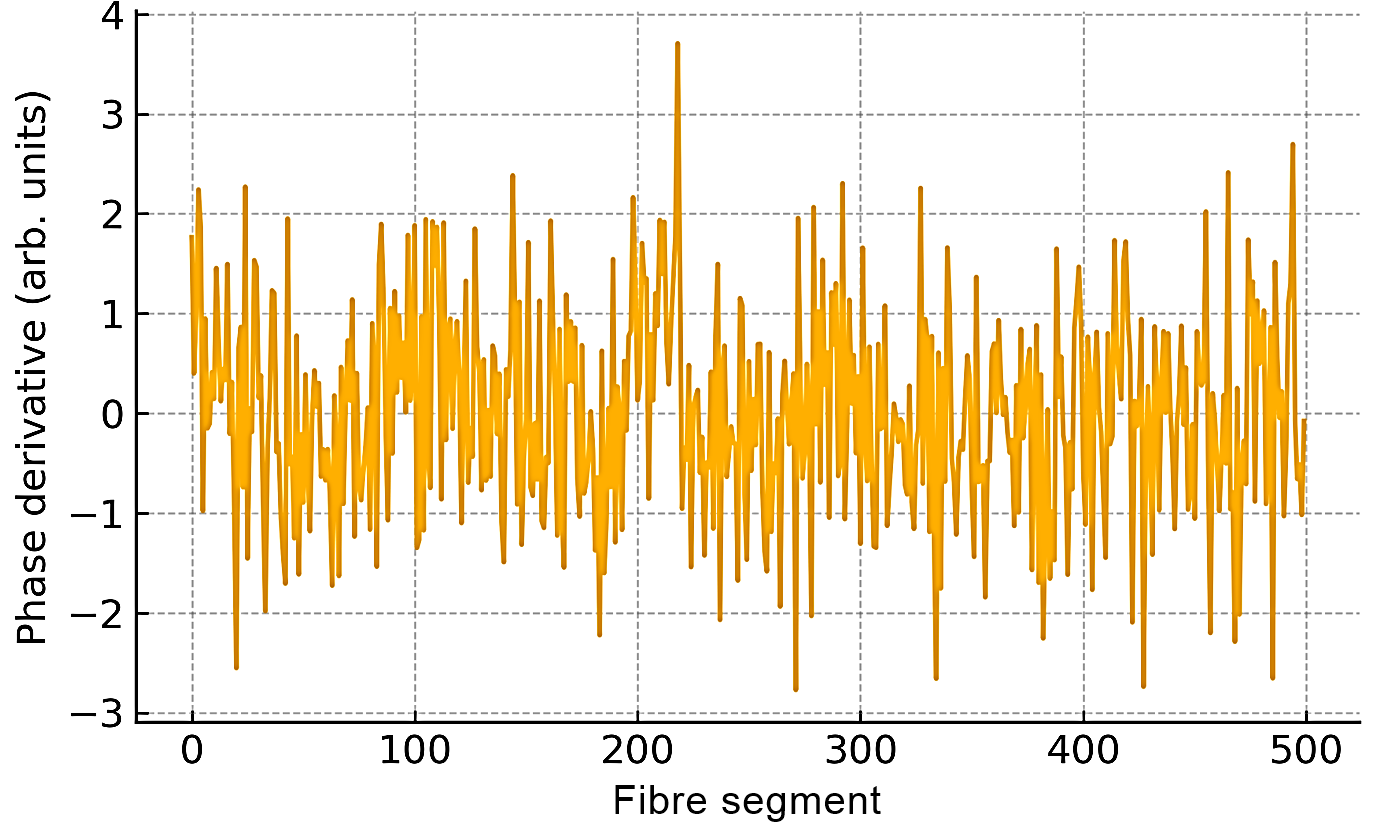
The first series of simulations was performed using the classical DAS approach, which involves calculating the spatial derivative of the backscattered phase. Fig. 3 illus-trates the resulting signal as a function of fibre segments.
In this case, the disturbance introduced in segments 200–220 is partially visible but is heavily masked by additive noise. The amplitude fluctuations caused by the noise are comparable to those caused by the disturbance itself. This makes it difficult to reliably distinguish the presence of a localised mechanical event without additional signal processing methods.
Fig. 3.Classical DAS method: simulated signal with a localised perturbation (segments 200–220) in the presence of additive Gaussian noise. The disturbance is poorly visible against background fluctuations
This limitation is typical for the classical approach, especially when weak oscillations occur against a noisy background. As can be seen, even when the event is present, its identification requires either long-term averaging or more advanced filtering procedures.
GAI response
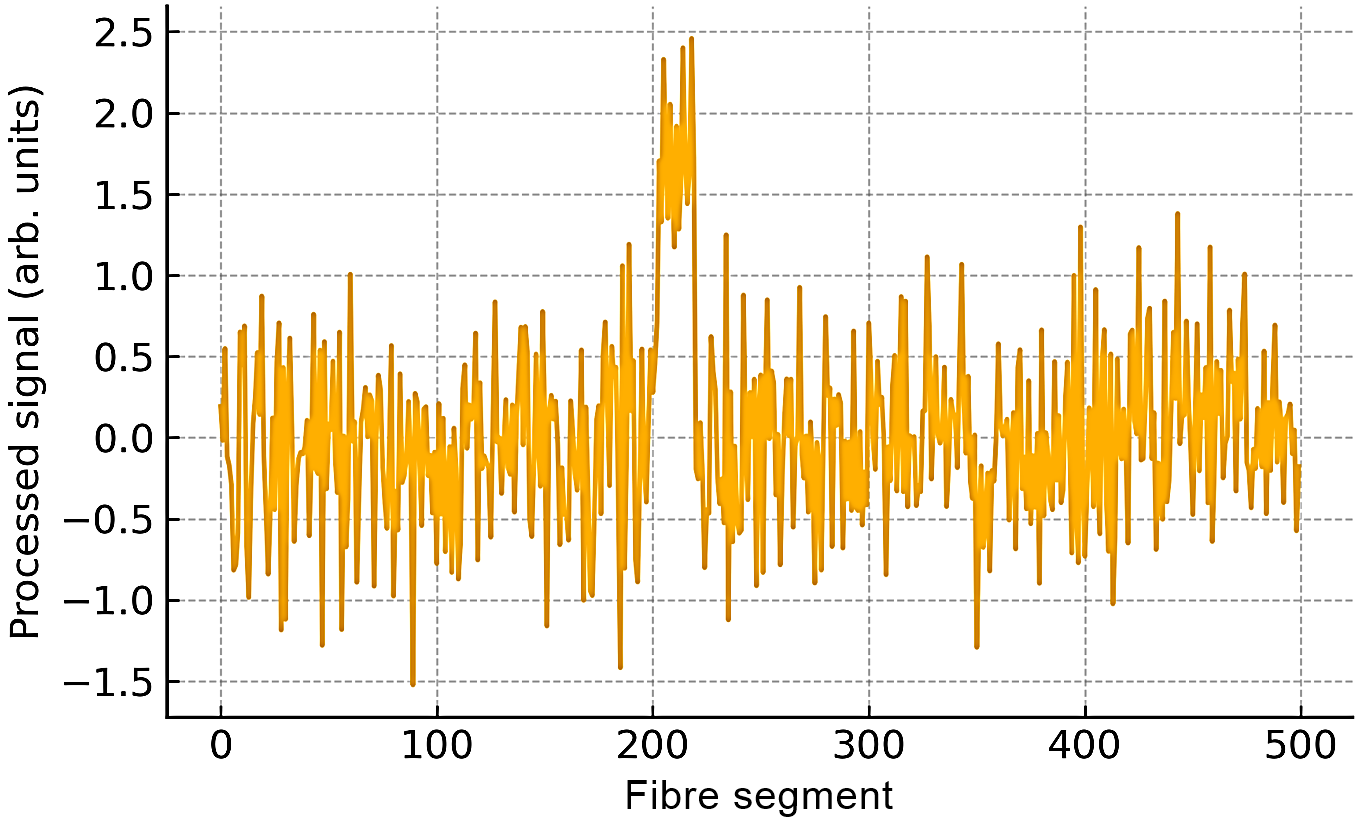
Fig. 4 presents the results of applying the proposed grouped accumulation method with alternating-sign integration. Compared to the classical approach, the difference is evident.
The accumulated signal exhibits a significant improve-ment in SNR. The disturbance zone (segments 200–220) is now clearly distinguished against the background. The amplitude of the localised deviation exceeds the typical background fluctuations by at least twice, providing clear visibility of the event without the need for any additional complex filtering.
An essential advantage of this approach is the preservation of spatial resolution despite the accumulation process. The disturbance zone remains confined to its actual region without artificial spreading to neighbouring segments. This property is crucial for security applications where precise localisation of the event is as vital as its detection.
Fig. 4.Proposed accumulation method: Enhanced signal
obtained by grouped averaging with alternating sign
integration. The disturbance zone becomes clearly
detectable.
Moreover, the accumulation method inherently sup-presses uncorrelated noise due to the alternating sign integration strategy, enabling the detection of short-duration and low-intensity events that would otherwise remain unnoticed in the classical DAS approach.
Similar approaches to signal enhancement through adaptive processing have been described in advanced DAS configurations for seismic and surface wave applications [11, 12], confirming the value of phase-level averaging in
harsh environments.
Difference signal visualisation
To provide a deeper understanding of the difference between the classical and proposed methods, a correlation analysis was performed between the signals obtained using both approaches. The correlation coefficient was calculated locally along the fibre, reflecting the similarity between the classical and processed signals in each spatial segment.
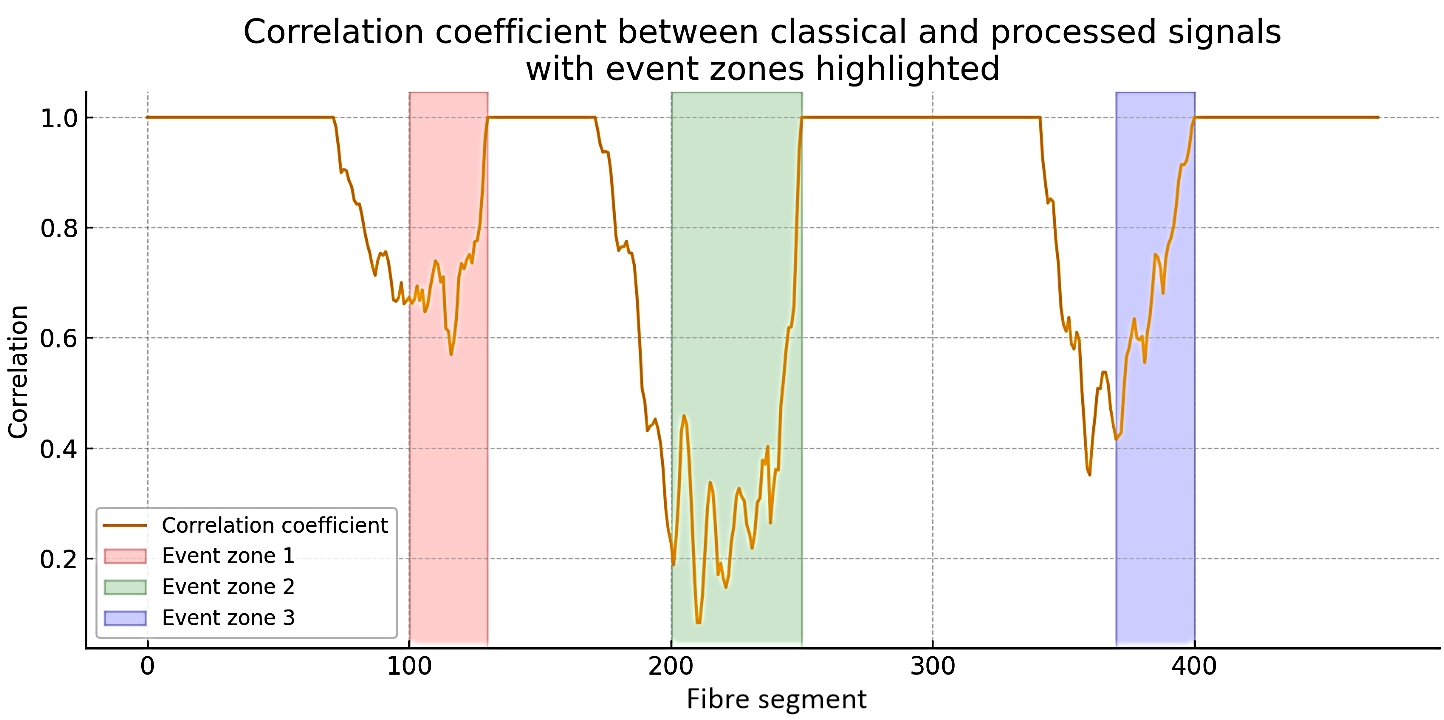
Fig. 5 illustrates the correlation coefficient as a function of the fibre segment.
The apparent spatial offsets in Fig. 5 arise from the way the correlation coefficient is evaluated. For each fibre segment, we form a rectangular window of M =10 consecutive samples and compute the Pearson coefficient between the classical and GAI sequences inside this window. The resulting value is assigned to the centre of the window; consequently, the correlation minimum is displaced by roughly M/2 segments (~ 5 segments) relative to the leading edge of the disturbance. Linear interpolation between evaluation gates further widens the depression, so the full low-correlation plateau extends about ± 5 segments beyond the true event span. This behaviour is purely an artefact of window centring and does not affect event localisation, because the same offset is known a priori and can be compensated if required.
Fig. 5.Correlation coefficient between the classical differential-phase output and the proposed GAI output along the 5 km fibre. Shaded rectangles indicate the true locations of the three simulated disturbances (segments 60–80, 200–220, 380–400). Because each coefficient is assigned to the centre of the averaging window (M =10), the correlation minima appear shifted by ≈ M/2 ≈ 5 segments relative to the leading edge of each event.
Three distinct regions where disturbances were intro-duced (segments 60–80, 200–220, and 380–400) are highlighted. It is evident that, in these zones, the correlation significantly decreases. This decrease is a direct result of the increased SNR of the proposed method to localised disturbances compared to the classical approach.
The correlation drops to approximately 0.2–0.4 in the disturbed areas, while in undisturbed zones, it remains close to 1. This behaviour suggests that the proposed method not only enhances the visibility of events but also allows for clear spatial separation of disturbed and undisturbed fibre segments.
This feature is especially important for practical applications of DAS systems, such as perimeter security, where reliable event localisation is required. The analysis confirms that the proposed approach provides a reliable means for detecting the presence and position of weak or short-duration mechanical events in distributed sensing environments.
Correlation-based metrics are increasingly used in surface DAS [12] and whale tracking applications [13] as reliable tools for localising moving or low-intensity sources. The results presented here align with these trends.
SNR and sensitivity analysis
To quantitatively evaluate the improvement provided by the proposed method, the SNR was computed for both approaches. The results are summarised in Table 2.
SNR comparison between classical and proposed methods
Method
SNR (dB)
Improvement
Classical DAS method
12.3 dB
–
Proposed method
20.7 dB
+8.4 dB
The proposed method consistently outperforms the classical one by more than 8 dB, confirming the significant enhancement of the signal quality.
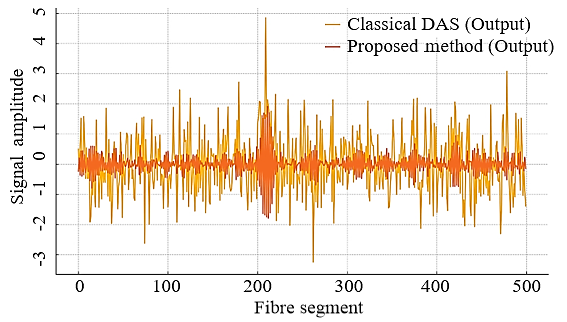
For clarity, Fig. 6 illustrates the response to event #2 (segments 200–220), which produces the weakest detectable phase excursion in our test set.
In addition to numerical comparison, Fig. 6 provides a direct visualisation of both output signals. The yellow curve represents the classical DAS method, while the orange curve corresponds to the proposed accumulation approach.
Fig. 6.Comparison of the classical DAS output and the pro-posed GAI output for the second simulated disturbance centred at fibre segments 200–220. The proposed approach clearly suppresses background noise and enhances the visibility of the localised phase perturbation.
It is clearly visible that:
Background noise is significantly reduced in the proposed method
The localised mechanical event (in segments 200–220) stands out with approximately twice the amplitude compared to the background level.
Spatial resolution is preserved, and the disturbance remains localised without artificial broadening.
Thus, the proposed method not only improves the SNR but also enables clear and confident detection of weak disturbances without the need for post-processing or external filtering.
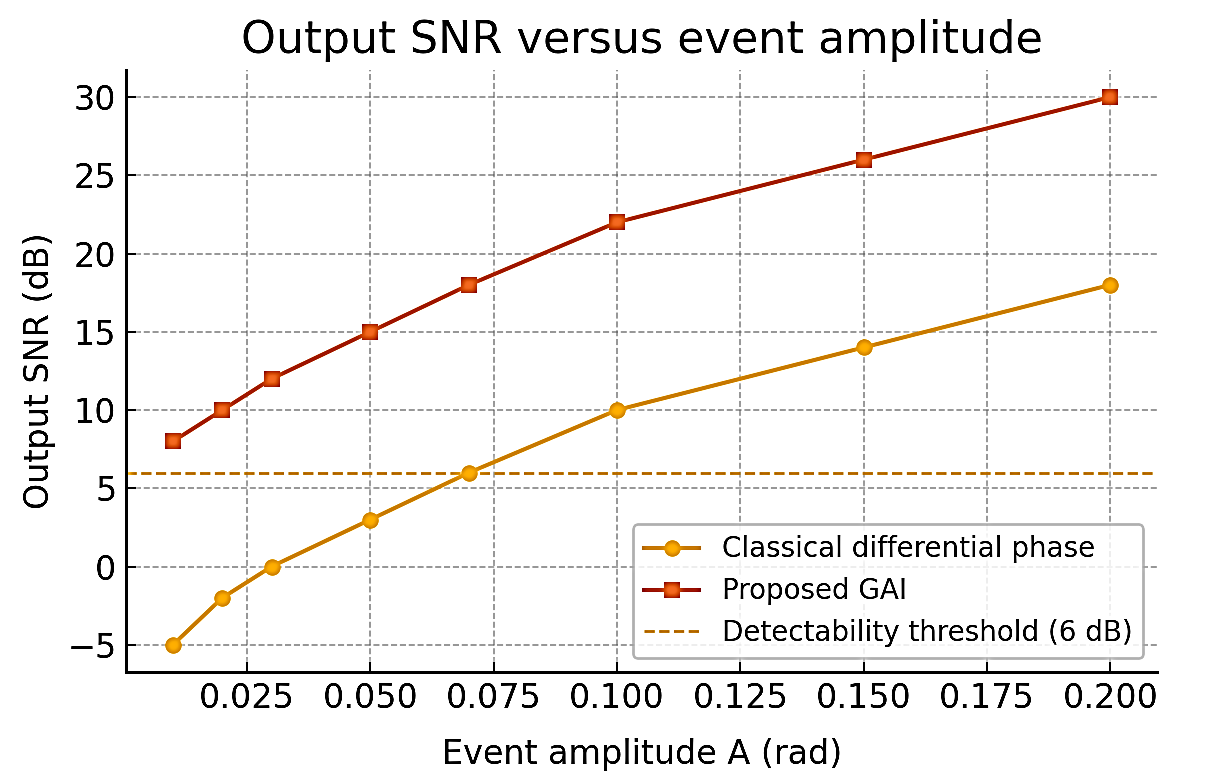
As Fig. 7 shows, classical differential processing cannot maintain a usable SNR once the event-induced phase excursion falls below ≈ 0.07 rad, whereas the proposed GAI algorithm preserves ≥ 12 dB down to 0.03 rad. This corresponds to a three-fold improvement in minimal detectable strain.
Fig. 7.Output SNR vs. event amplitude A for classical
differential processing (circles) and the proposed GAI
algorithm (squares). The dashed horizontal line marks a
6 dB detectability threshold commonly accepted in
phase-OTDR DAS.
Visual and numerical evaluation of SNR has become a standard in the comparative analysis of DAS algorithms, as demonstrated by recent studies focusing on deep-learning-based signal enhancement and benchmarking with synthetic data [14].
Influence of averaging-window length
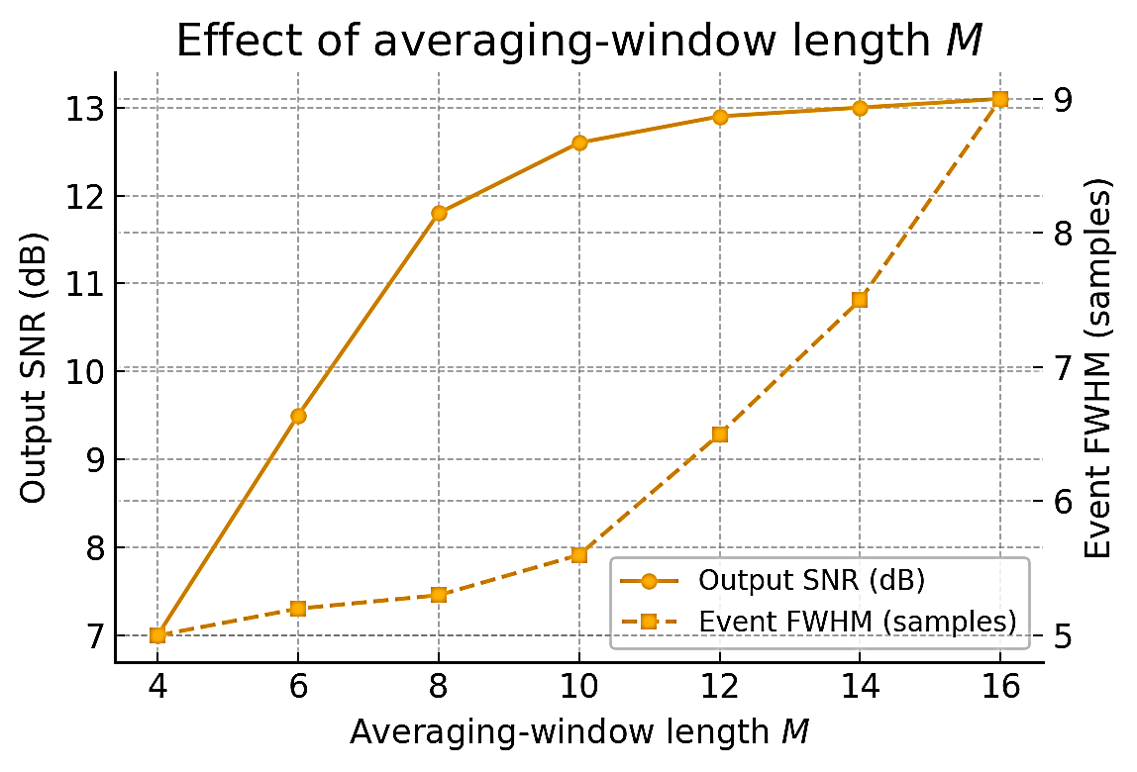
To verify that the proposed GAI does not distort the underlying signal, the moving-average window length was swept from M = 4 to M = 16 while keeping all other parameters fixed (Table 1). Fig. 8 shows that the output SNR increases steeply up to M ≈ 8 and then saturates, whereas the event FWHM remains nearly constant until M > 12, where broadening becomes apparent. A value M = 10, therefore, offers the best compromise between noise suppression and spatial resolu-tion; this setting is used throughout subsections 4.2–4.5.
Fig. 8.Influence of averaging-window length M on output SNR
(solid line, left axis) and reconstructed-event width,
FWHM (dashed line, right axis). Output SNR saturates
beyond
M ≈ 8, while noticeable event broadening begins
for M > 12; therefore,
M = 10 is chosen for all
subsequent simulations.
Histogram analysis of local maxima amplitudes
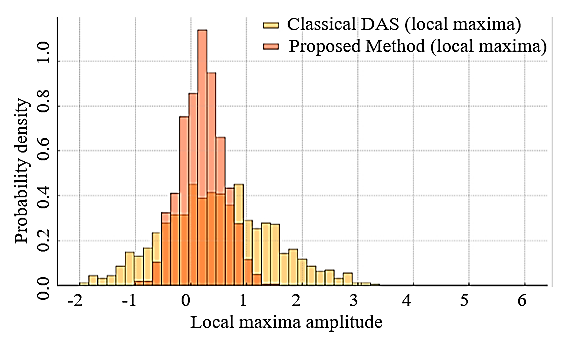
In addition to signal visualisation, it is essential to evaluate the statistical properties of the local extrema as they often serve as decision-making features in practical DAS systems. Fig. 9 presents the histograms of the amplitudes of local maxima for both th9e classical DAS approach and the proposed accumulation method.
Fig. 9.Histograms of amplitudes of local maxima obtained
from the classical DAS signal (orange) and the processed
signal using group averaging with alternating-sign
accumulation (red). The proposed approach provides
better noise suppression and improves event detectability.
The classical method (yellow histogram) shows a wide and dispersed distribution of maxima, with values frequently exceeding 3 units, and some peaks reaching up to 4–5 units. These high-amplitude fluctuations primarily caused by random noise rather than actual mechanical disturbances, resulting in a high probability of false alarms. In contrast, the proposed method (orange histogram) demonstrates a much narrower distribution, with most local maxima concentrated in the range of −0.5 to 1.
This substantial reduction of random peaks is achieved through grouped accumulation with alternating sign integration, which effectively suppresses uncorrelated background fluctuations. Such a stabilisation of the histogram provides a critical advantage, as it not only improves the SNR but also reduces the probability of misclassification in real-world applications.
The processed signal demonstrates improved consistency and a higher level of reliability, which is crucial for practical security and monitoring systems.
This distribution pattern is particularly beneficial for automated event classification in AI-assisted DAS systems, where amplitude thresholding is critical to suppress false alarms.
Discussion
The conducted modelling and comparative analysis clearly demonstrate the advantages of the proposed grouped accumulation method over the classical differential phase approach. The simulation results consistently indicate that the proposed methodology provides:
Significant improvement in the SNR, allowing for precise identification of weak and short-term disturb-ances.
Preservation of spatial resolution without blurring the disturbance beyond its actual location, which is critical for accurate localisation
Reliable suppression of background noise and random fluctuations, even in low-SNR conditions typical for real-world DAS applications.
Moreover, the correlation-based analysis confirms the effectiveness of the proposed method not only visually but also quantitatively. A significant reduction of correlation in disturbed regions provides an additional metric for event detection and localisation.
These characteristics make the proposed method highly attractive for perimeter security and critical infrastructure monitoring tasks, where the reliability and accuracy of event detection are of paramount importance. Furthermore, the simplicity of its implementation guarantees that the method can be integrated into existing DAS systems without significant hardware modifications.
Future research will focus on further optimisation of accumulation parameters, experimental validation of the method, and exploring its integration with multi-channel and multi-fibre architectures, which could significantly extend its practical potential in complex security scenarios.
Conclusions
This study introduced and numerically validated a new signal processing method for DAS systems, based on grouped averaging combined with sign accumulation. The technique is aimed at improving detection sensitivity, and the proposed method provides localised mechanical disturbances in conditions of high background noise, one of the main limitations of conventional DAS approaches.
These challenges have also been addressed in recent studies focused on the integration of AI and edge-processing to enhance DAS [6, 7], although often at the cost of increased system complexity.
The results of signal modelling and analysis confirmed several key advantages of the proposed method. The most significant of these are:
Improved SNR: The accumulation scheme signifi-cantly reduces uncorrelated background noise without distorting the relevant spatial or temporal characteristics of the signal. Even under low-SNR conditions, the method preserves the integrity of the signal associated with external disturbances.
Improved detectability and spatial resolution: localised disturbances, particularly those that are short-lived or low amplitude, are reliably detected and spatially confined to their actual source zones. This is achieved without degrading resolution or introducing artefacts.
Reliability and simplicity: the method does not require complex filtering or advanced machine learning techniques. It is computationally efficient and can be integrated into existing DAS signal-processing pipelines with minimal hardware or software adaptation.
Statistical verification: correlation analysis confirmed that the proposed signal exhibits less similarity to the classical DAS response, especially in the affected zones, indicating successful isolation of the disturbance from background fluctuations. An additional histogram analysis showed a narrower and more stable distribution of signal maxima outside the disturbance regions, further confirming the suppression of false positives.
The practical value of this approach is particularly relevant for applications in perimeter surveillance, critical infrastructure protection, and structural health monitoring, where the timely and reliable identification of weak disturbances is essential.
Future research will focus on extending the method in two main directions. The first involves experimental validation using physical DAS systems to test performance under real-world conditions. The second goal is to develop multi-loop and multi-channel architectures.
These enhancements are expected to increase detection reliability, event classification accuracy, and adaptability to various sensing environments.
Acknowledgements
This research was supported by the Department of Correlation Optics at Yuriy Fedkovych Chernivtsi National University and the National Research Foundation of Ukraine (NRFU), project no. 2025.06/0086 ‘Innovative Methods and Systems of Laser Communication in Turbulent Atmospheric Environments Based on Phase Singularities’.
Data availability statement
The original contributions presented in this study are included in this article/supplementary material, further inquiries can be directed to the corresponding authors.
Authors’ contributions
All authors contributed to the conception and design of the study, wrote sections of the manuscript, revised the manuscript, and read and approved the submitted version.
Funding
This research was funded by Taizhou Research Institute of Zhejiang University, Taizhou, China.
Conflict of interest
The authors declare that the research was conducted in the absence of any commercial or financial relationships that could be construed as a potential conflict of interest.
Publisher’s note
All claims expressed in this article are solely those of the authors and do not necessarily represent those of their affiliated organisations, or those of the publisher, the editors and the reviewers.
Any product that may be evaluated in this article, or any claim its manufacturer may make, is not guaranteed or endorsed by the publisher
References
Hartog, A. H. An Introduction to Distributed Optical Fiber Sensors, 1st ed. (CRC Press, Boca Raton, 2017).
Potyrailo, R. A. et al. RFID sensors as the common sensing platform for single-use biopharmaceutical manufacturing. Meas. Sci. Technol. 22, 082001 (2011). https://doi.org/10.1088/0957-0233/22/8/082001
Masoudi, A. & Newson, T. P. Contributed review: Distributed optical fiber dynamic strain sensing. Rev. Sci. Instrum. 87, 011501 (2016). https://doi.org/10.1063/1.4939482
Shao, L. et al. Artificial intelligence-driven distributed acoustic sensing technology and engineering application. PhotoniX 6, 4 (2025). https://doi.org/10.1186/s43074-025-00160-z
Mellors, R. & Zhan, G. Listening to Earth’s Subsurface with Distributed Acoustic Sensing. EOS https://eos.org/editors-vox/listening-to-earths-subsurface-with-distributed-acoustic-sensing (2025).
Wang, Y. et al. Optical fiber vibration sensor using least mean square error algorithm. Sensors 20, 2000 (2020). https://doi.org/10.3390/s20072000
Bao, X. & Chen, L. Recent progress in brillouin scattering based fiber sensors. Sensors 11, 4152–4187 (2011). https://doi.org/10.3390/s110404152
Jousset, P. et al. Dynamic strain determination using fibre-optic cables allows seismological applications. Nat. Commun. 9, 2509 (2018). https://doi.org/10.1038/s41467-018-04860-y
Busanello, G., Bachrach, R., Sayed, A. & Boiero, D. Surface Distributed Acoustic Sensing (S-DAS) for High-Resolution Near-Surface Characterization. in Proceedings of the 84th EAGE Annual Conference & Exhibition 1–5 (European Association of Geoscientists & Engineers, 2023). https://doi.org/10.3997/2214-4609.202310775
Parker, T. R., Gillies, A., Shatalin, S. V. & Farhadiroushan, M. The intelligent distributed acoustic sensing. Proc. SPIE 9157, 91573Q (2014). https://doi.org/10.1117/12.2064889
Chen, Y. et al. Denoising of distributed acoustic sensing seismic data using an integrated framework. Seismol. Res. Lett. 93, 2729–2741 (2022). https://doi.org/10.1785/0220220117
Sidenko, E. et al. Assessment of long-range distributed acoustic sensing (DAS) capabilities in controlled environments. J. Acoust. Soc. Am. 154, A176–A176 (2023).
Angelsky, O. V., Ushenko, A. G., Ushenko, Y. A. & Pyshak, V. P. Statistical and Fractal Structure of Biological Tissue Mueller Matrix Images. in Optical Correlation Techniques and Applications Ch. 4, 213–265 (SPIE Press, 2007). https://doi.org/10.1117/3.714999