Department of Telecommunications and Teleinformatics, Wrocław University of Science and Technology, ul. Wybrzeże Wyspiańskiego 27, 50-370 Wrocław, Poland
Military University of Technology, ul. gen. Sylwestra Kaliskiego 2, 00-908 Warszawa, Poland
A realisation of a Q-switched Tm³⁺-doped fibre laser operating at 1.96 μm wavelength isreported. The Tm³⁺-doped fibre was fabricated using a novel multi-ring modified chemicalvapour deposition-chelate doping technique (MCVD-CDT) technology. The developed laseremits pulses at a repetition rate of 3 kHz with an energy of 84 μJ and a duration of 272 ns,which corresponds to a peak power of 309 W. The experimental results confirm that thefabricated Tm3+-doped multi-ring, large mode area fibre is a promising candidate fordeveloping high-energy Q-switched lasers operating near 2 μm wavelength.
Introduction
Tm3+-doped fibre sources with an operating wavelength of 2 μm have recently attracted considerable attention [1–4]. The main reason for this is the growing number of applications for 2 μm lasers. Furthermore, pulsed doped fibre lasers are preferred for many of these applications. Currently, the lasers operating at a 2 μm wavelength are used in medicine, optical sensing, microprocessing of polymer materials, spectroscopy, and remote optical communications [2, 5]. Due to the overlap of the 2 μm wavelength with H2O absorption in biological tissue, 2 μm lasers are used in various medical fields, such as urology or to fragment kidney stones [2, 6, 7]. For example, high-energy pulsed 2 μm lasers with good beam quality are especially suitable for the development of differential absorption lidar (DIAL) systems for remote detection of water vapour [8]. For DIAL applications, Qswitched lasers are preferred because they can produce energies above 50 μJ with short pulse durations, which reduce the thermal background, while also providing good pulse-to-pulse stability. 2 μm lasers are also used for cutting, splicing, and marking polymer materials [9, 10] and can be employed for detecting greenhouse gases like CO2, which have strong absorption in this spectral region [11, 12]. Moreover, 2 μm lasers are often used as optical pumps to generate mid-infrared (MIR) radiation [13, 14]. For example, 2 μm lasers can pump nonlinear crystals in optical parametric oscillator (OPO) systems for generating a spectrum spanning between 3 and 5 μm [13]. Additionally, a broadband MIR supercontinuum source can be achieved by pumping heavy-metal fluoride glass fibre with a pulsed Tm³⁺ fibre laser [14]. Recently, 2 μm lasers were also used to pump Tb3+-doped chalcogenide glass fibres that operate at wavelengths exceeding 5 μm [15].
Tm3+ fibre lasers based on silica glass are well-developedand can provide hundreds of watts of output power ina continuous-wave (CW) operation [3, 4]. Tm3+ lasers canbe pumped by 793 nm high-output power laser diodes.Due to the cross-relaxation mechanism under 793 nmpumping, these lasers can operate with a theoretical slopeefficiency of around 70%, exceeding the Stokes limit [3, 4].In pulsed operation, by using active Q-switching or gain-switching, these lasers can produce millijoule outputenergy and peak powers in the hundreds of kW [16].Another Q-switching technique that is commonly studiedin the literature is based on the use of saturable absorbersas passive Q-switch modulators. The main advantage is thata Q-switched laser cavity has a simple construction.However, passively Q-switched fibre lasers generate onlya few μJ of output energy, with pulse durations in the rangeof a few microseconds and peak powers of only a few watts[17]. Moreover, the repetition rate generated by a passivelyQ-switched 2 μm fibre laser varies with pump power. Itshould be pointed out that for the Q-switched operation,large-core-diameter fibres are preferred because higherenergy can be extracted from such a laser system.Thus, significant attention has been paid to developing Tm3+-doped large-core-area fibres that can operate ina transverse single mode whilst delivering high-energy,high-peak-power pulses. The commercially availablelarge-mode-area (LMA) Tm³⁺-doped silica fibres have corediameters ranging from 16 μm to 25 μm, core numericalapertures (NA) between 0.09 and 0.16, and first claddingNA values greater than 0.46 [18]. In LMA, the core isenlarged, and the NA is reduced to maintain the single-mode operation of a Tm3+-doped silica fibre. Commerciallyavailable LMA fibres are mostly fabricated using thesolution doping method; however, this method offersminimal possibilities for shaping the refractive indexprofile of rare-earth-doped preforms. Q-switched fibrelasers based on these Tm3+-doped fibres can deliver outputenergies of up to 0.3 mJ, with peak powers reaching severalof kilowatts [19].
Another approach to developing Tm3+-doped large-core-area fibres is to utilize the photoniccrystal fibre (PCF) technology. The PCF structure enablesthe design of large-mode-area fibres operating ina transverse single mode [20]. PCF technology providesgreat flexibility in shaping the refractive index profile ofrare-earth-doped preforms. However, it should be men-tioned that the fabrication of PCF glass preforms isa complicated and time-consuming process. Recently,much attention has been devoted to developing photoniccrystal LMA Tm3+-doped fibres for a Q-switched laseroperation. For example, in [21], a Tm3+-doped PCF witha mode-field area above 1000 μm2 was used to realise anactively Q-switched fibre laser. The developed Tm3+-dopedPCF Q-switched laser emitted 8.9 kW peak power pulseswith an energy of 435 μJ and a duration of 49 ns, ata 10 kHz repetition rate and an operating wavelength of2 μm. Also, in [20], an actively Q‑switched Tm-doped PCFfibre laser emitting pulses with an energy of 2.4 mJwas demonstrated. The Q‑switched oscillator employeda Tm3+-doped PCF featuring a core diameter of 81 μm anda cladding of 260 μm diameter for clad pumping [22]. Itshould be pointed out that the Tm3+-doped PCF had to bekept straight, which negatively affected the compatibility of this Qswitched laser system. Recently, a Qswitched Tm3+ fibre laser relying on a flexible PCF with a core diameter of 50 μm was reported [23]. This laser produced pulses with pulse energies of 1.9 mJ, a pulse width of 116 ns, and a peak power of 15.4 kW [23]. An alternative approach to fabricating a Tm3+-doped fibre with an LMA consists of using a multi-ring structure [22]. The multi-ring structure reduces the doped core effective refractive index, thus enabling a single-mode operation with a relatively large beam diameter. This approach allows greater control over shaping the refractive index profile of rare-earth-doped preforms compared to the solution doping method, while still being far less effort-consuming than fabricating a PCF preform. Such a fibre is simpler to realise than PCF because the multi-ring preform can be made employing a well-established modified chemical vapour deposition-chelate doping technique (MCVD-CDT) technology [24]. Even though MCVD-CDT Tm3+-doped multi-ring fibres are well known, their performance as a lasing medium of a Qswitched fibre laser has not been studied much in the literature. Thus, in this contribution, the performance of a new construction Tm3+-doped MCVD-CDT multi-ring fibre is investigated in a Qswitched laser configuration.
The manuscript is organised into four sections. Section 1 presents the introduction; section 2 demonstrates the experimental setup. In section 3, the results for the Qswitched Tm3+-doped multi-ring fibre laser are presented and discussed. Finally, in section 4, the conclusions are presented.
Experimental methods
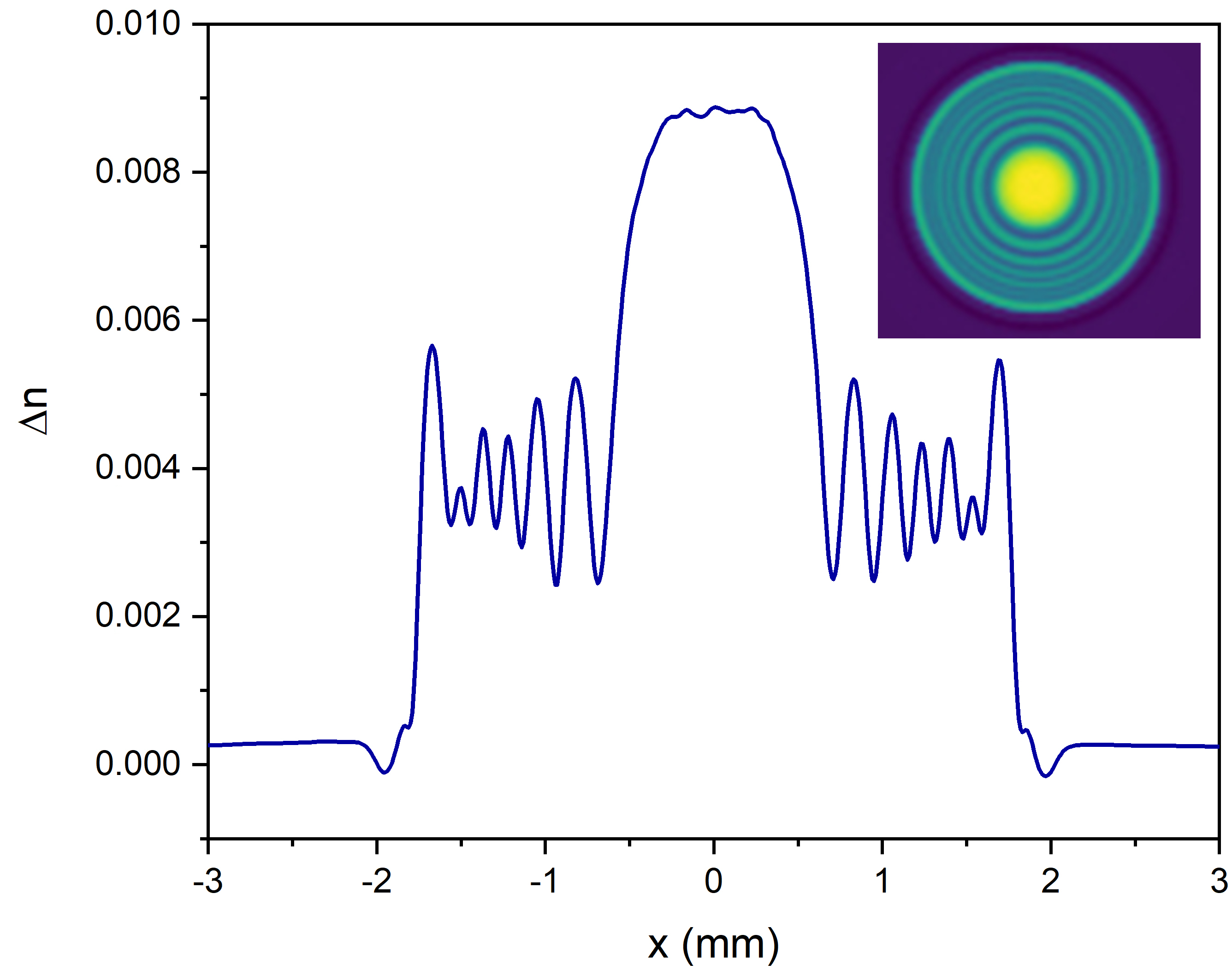
The Tm3+-doped multi-ring double-clad fibre was fabricated at Bialystok University of Technology using MCVD-CDT. This technique involves doping with rare-earth elements in the form of evaporated chelate compounds and embedding them into the structure of the doped core directly during the silica deposition process. This technology is an extension of the well-known solution doping method, where the porous structure of the core layer is impregnated with an alcohol solution of chelates and then sintered in a glass form during the subsequent MCVD process. An undeniable advantage of the solution doping method is the ability to introduce higher concentrations of active dopants, which is why it is still frequently used to produce preforms for laser fibres. Unfortunately, this method also has drawbacks, such as typically higher attenuation levels due to the need for the solution and relatively small core sizes resulting from the limited impregnability of the soot layer. Thus, this technology is typically used to fabricate step-index fibre types. The fibre refractive index profile determines the propagating beam profile. In many applications, a Gaussian beam profile in the fibre is highly desired due to the ability to precisely process it with optical systems (precision beam control, e.g., minimal focal point). To achieve this, we propose the novel construction of a fibre in which the core consists of alternating layers of active Tm3+-doped ions and undoped silica (presented in Fig. 1). This structure allows for the profiling of the beam shape propagated in the optical fibre. The active layers were additionally doped with Al2O3, which is used for better coordination of lanthanide ions (Tm3+) within the silica glass host structure.
Fig. 1.The refractive index profile and map (inset) of a Tm3+ multi-ring preform.
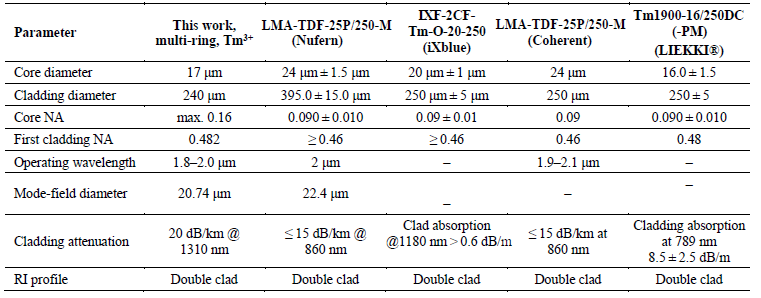
The central layer had the highest concentration of Tm2O3 at 0.56 wt%, with Al2O3 concentration equal to 5.2 wt%. As a result, Δn was 9 × 10⁻³. A single-mode double-clad fibre (17/240 μm core/cladding diameter) was drawn from the preform. The detailed construction, technology, and characterisation of the fibre preform [including lifetime measurements, electron probe micro-analysis using wavelength dispersive X-ray spectrometry (EPMA-WDS), and SEM images)], as well as the refractive index profile of the fibre and optical beam profile (M2x = 1.10, M2y = 1.23), were presented in our previous work [25] in which the construction and characterisation of a CW all-fibre laser with generation at a wavelength of 1938.8 nm (excited at 790 nm), an FWHM of 0.17 nm, and output power of 1.68 W are presented. Table 1 presents the detailed parameters of the home-made Tm3+-doped multi-ring double-clad fibre in comparison with commercially available Tm3+-doped double-clad fibres.
Comparison of the parameters of active, double-clad optical fibres.
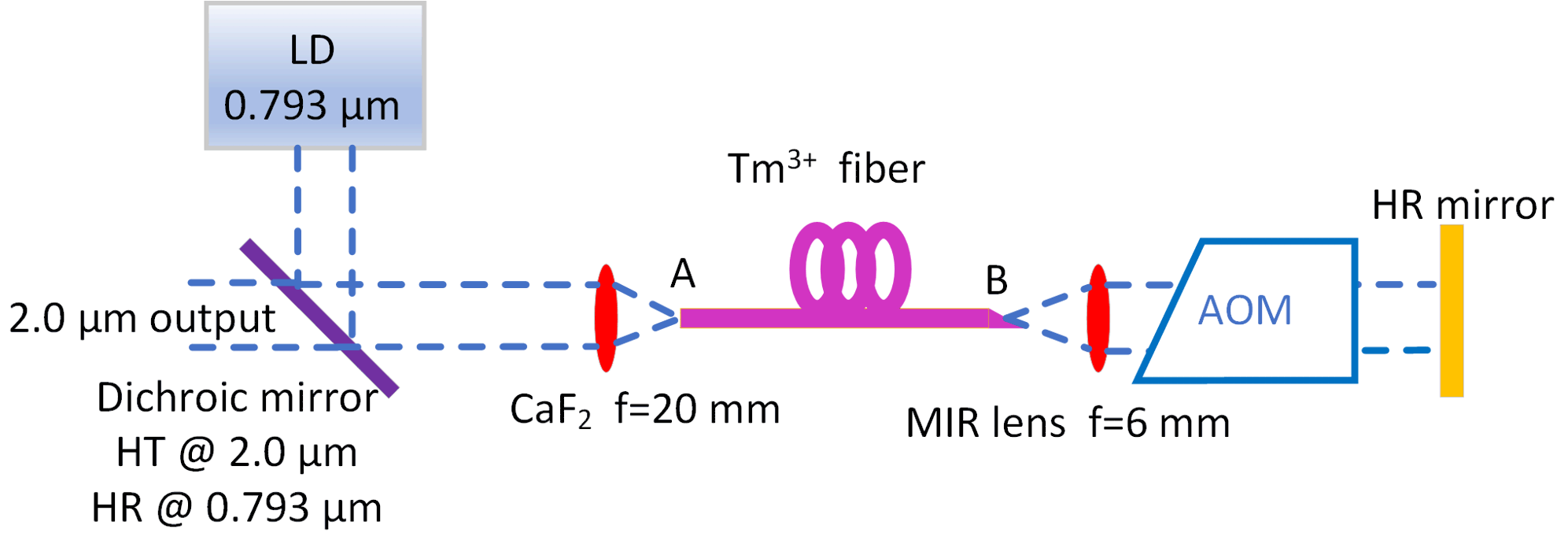
Fig. 2 illustrates the laboratory setup of the Qswitched Tm3+-doped multi-ring fibre laser. In the experiment, 10 m of Tm3+-doped multi-ring double-clad fibre was used. To pump the Tm³⁺-doped fibre, a laser diode at 793 nm was used. The diode produced 15 W of output power and was coupled to a multimode fibre with a 105 μm core diameter. The pump light at 793 nm was collimated using a fibre collimator and directed onto a dichroic optical mirror positioned at a 45-degree angle inside the laser cavity. The dichroic mirror was designed to reflect the pump wavelength (793 nm) while transmitting the signal wavelength around 2 μm. Efficient coupling of light into the Tm3+-doped fibre was achieved by employing an aspherical CaF2 lens with f = 20 mm. To form the laser cavity, the fibre end labelled “A” in Fig. 2 was perpendicularly cleaved and served as an output mirror with a 4% reflectivity. The second mirror, used to complete the laser cavity, was a gold mirror with a high reflectivity above 95% at 2 μm. To minimise Fresnel reflections, the fibre end labelled “B” was angle cleaved. To efficiently collect and collimate the light emerging from fibre end “B,” a sapphire ball lens with f = 6 mm was used inside the laser cavity. The acousto-optic modulator (Q-switch) was made from TeO2 (QS041-172 1.5C2P-4-MN4 Gooch&Housego), which is transparent at 2 μm wavelengths, and was placed inside the cavity. The Qswitch had a rise time of 153 ns. The pulses generated by the laser were monitored using a fast MIR detector with a time constant below 1.5 ns (PVMI-10.6, Vigo System, Poland). The detector was connected to an oscilloscope with a 500 MHz bandwidth. Laser output power was monitored by a power sensor (S415C Thorlabs). To record the spectrum emitted by the pulsed laser operating at a 2 μm wavelength, an optical monochromator combined with a ruled diffraction grating with 150 lines per mm and a sensitive MCT detector was used.
Fig. 2.The experimental layout of the Q -switched Tm3+-doped
multi-ring fibre laser.
Experimental results
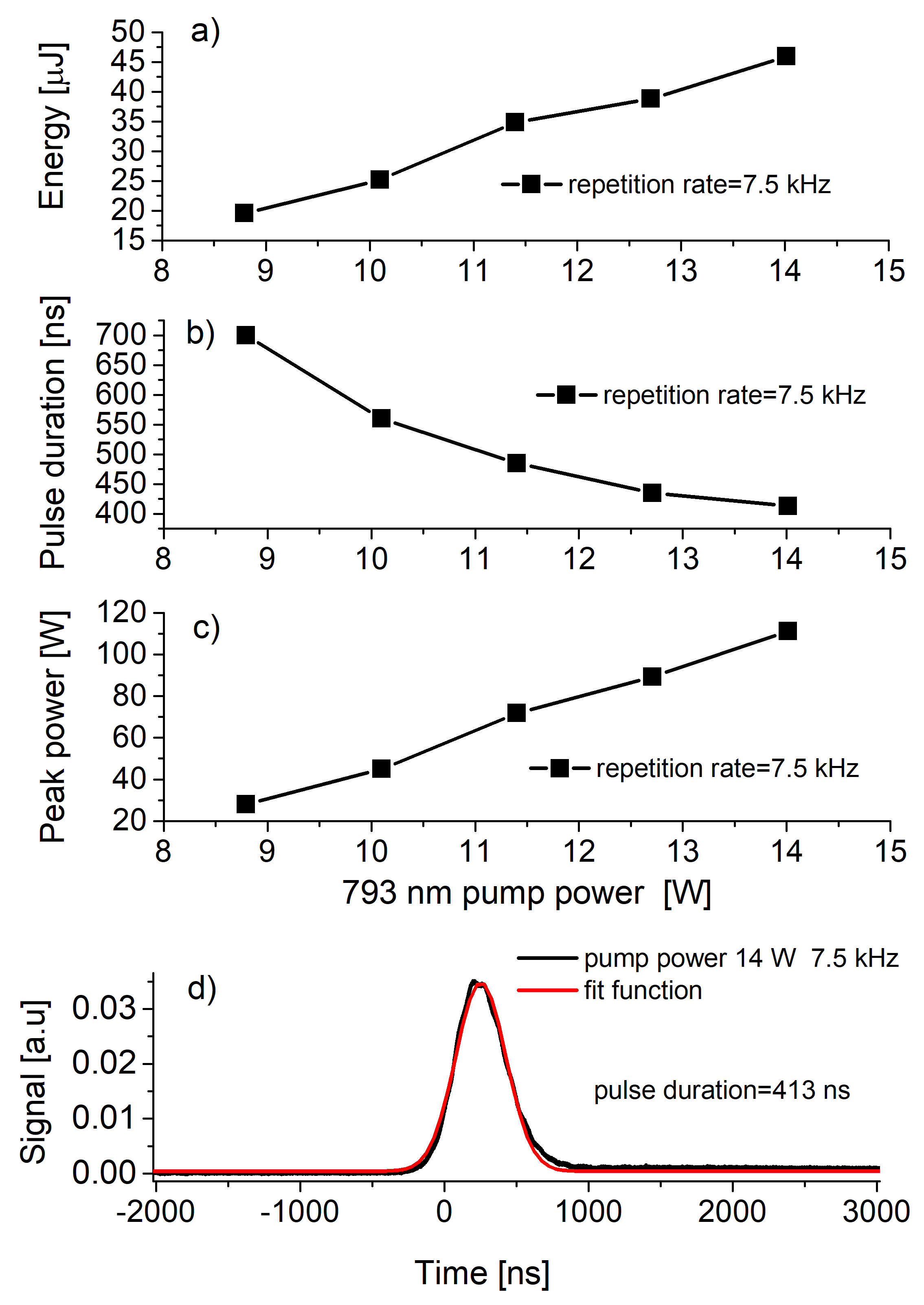
The performance of the Qswitched Tm3+-doped fibre laser was investigated at different repetition rates and pump powers. First, the Qswitched fibre laser characteristics at a repetition rate of 7.5 kHz was tested. Fig. 3(a) presents the output energy dependence in relation to pump power. The maximum output energy at the repetition rate was 46 μJ. The output energy varies linearly with respect to pump power. The available pump power limited further energy scaling. Fig. 3(b) depicts the dependence of pulse duration with respect to pump power. It can be noted that an increase in pump power results in a decrease in pulse duration. This is a common observation in Qswitched fibre lasers [26, 27]. The increase in pump power results in a higher population inversion, which leads to a shorter pulse duration generated by the Qswitched fibre laser [26, 27]. The minimum pulse duration of 413 ns was measured at the maximum pump power of 14 W, available at 793 nm. Thus, the measured pulse duration corresponds to approximately four round-trip times. Fig. 3(c) illustrates the peak power as a function of pump power. These results confirm that the maximum peak power achieved at a repetition rate of 7.5 kHz was 111 W. Finally, Fig. 3(d) shows the measured pulse shape at the maximum available pump power and a repetition rate of 7.5 kHz. The measured pulse shape was fairly well fitted with a Gaussian function though a noticeable deviation from the Gaussian pulse shape at the trailing edge can be observed.
Fig. 3.(a) Pulse energy. (b) Pulse duration. (c) Peak power as a
function of pump power. (d) The shortest pulse shape
was measured at 7.5 kHz.
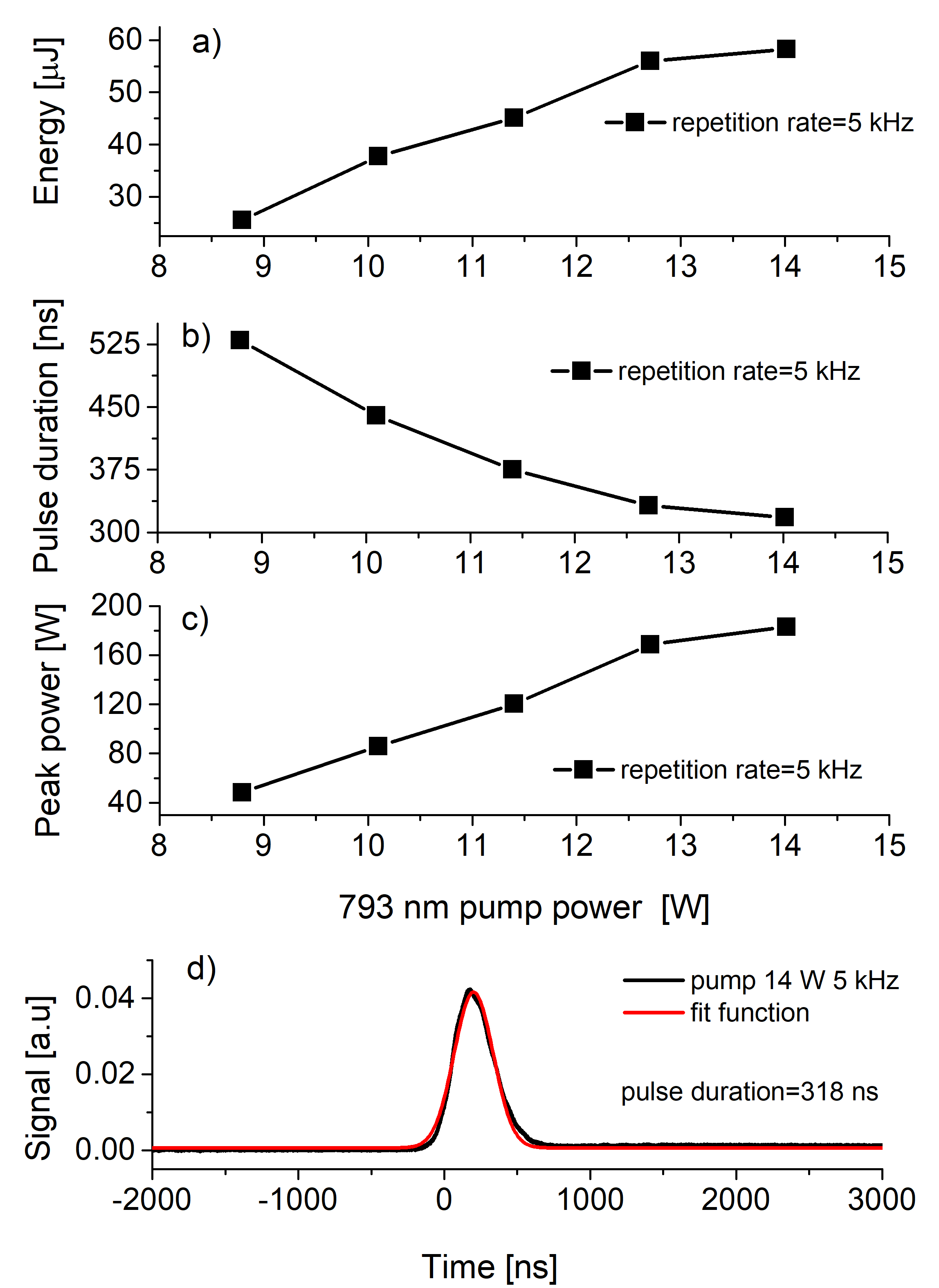
Fig. 4(a) demonstrates the output energy as a func-tion of pump power, measured at a repetition rate of 5 kHz. The maximum recorded pulse energy was 58 μJ. Fig. 4(b) depicts the evolution of pulse duration vs. pump power, where the shortest pulse duration of 318 ns was measured at 5 kHz with a pump power of 14 W. Fig. 4(c) presents the peak power in relation to pump power, whereby the maximum peak power of 183 W was achieved. The measured shortest pulse shape is shown in Fig. 4(d). It can be observed that at a repetition rate of 5 kHz, the maximum output energy and peak power increased when compared with the results measured at a pulse repetition frequency of 7.5 kHz (Fig. 3). This phenomenon can be understood considering that a higher population inversion builds up at a lower repetition rate, leading to an increase in output energy and a decrease in pulse duration [26, 27].
Fig. 4.(a) Pulse energy. (b) Pulse duration. (c) Peak power as a
function of pump power. (d) The shortest pulse shape
measured at 5 kHz.
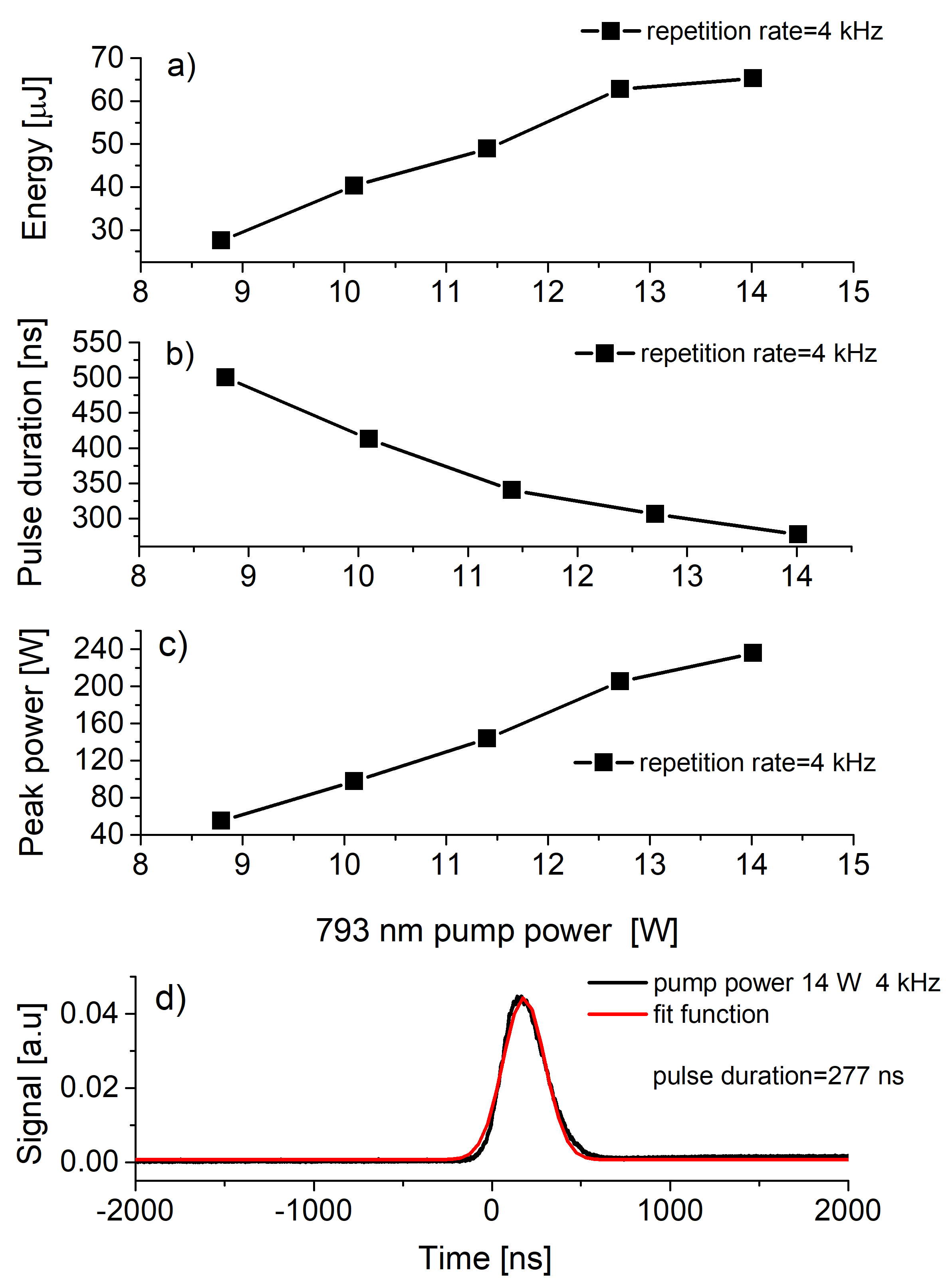
Further investigation of the Qswitched Tm3+-doped multi-ring fibre laser operation was conducted at a repeti-tion rate of 4 kHz. Fig. 5(a) illustrates the output energy as a function of pump power, measured at a repetition rate of 4 kHz. The maximum output pulse energy achieved at this repetition rate is 65 μJ. Further, Fig. 5(b) demonstrates the pulse duration dependence on pump power. These results show that the shortest recorded pulse duration was 277 ns. Fig. 5(c) presents the evolution of peak power with respect to pump power. At a pump power of 14 W, a peak power of 235 W was achieved. Finally, the measured pulse shape with the shortest pulse duration of 277 ns at a repetition rate of 4 kHz is presented in Fig. 5(d).
Fig. 5.(a) Pulse energy. (b) Pulse duration. (c) Peak power as
a function of pump power. (d) The shortest pulse shape
was measured at 4 kHz.
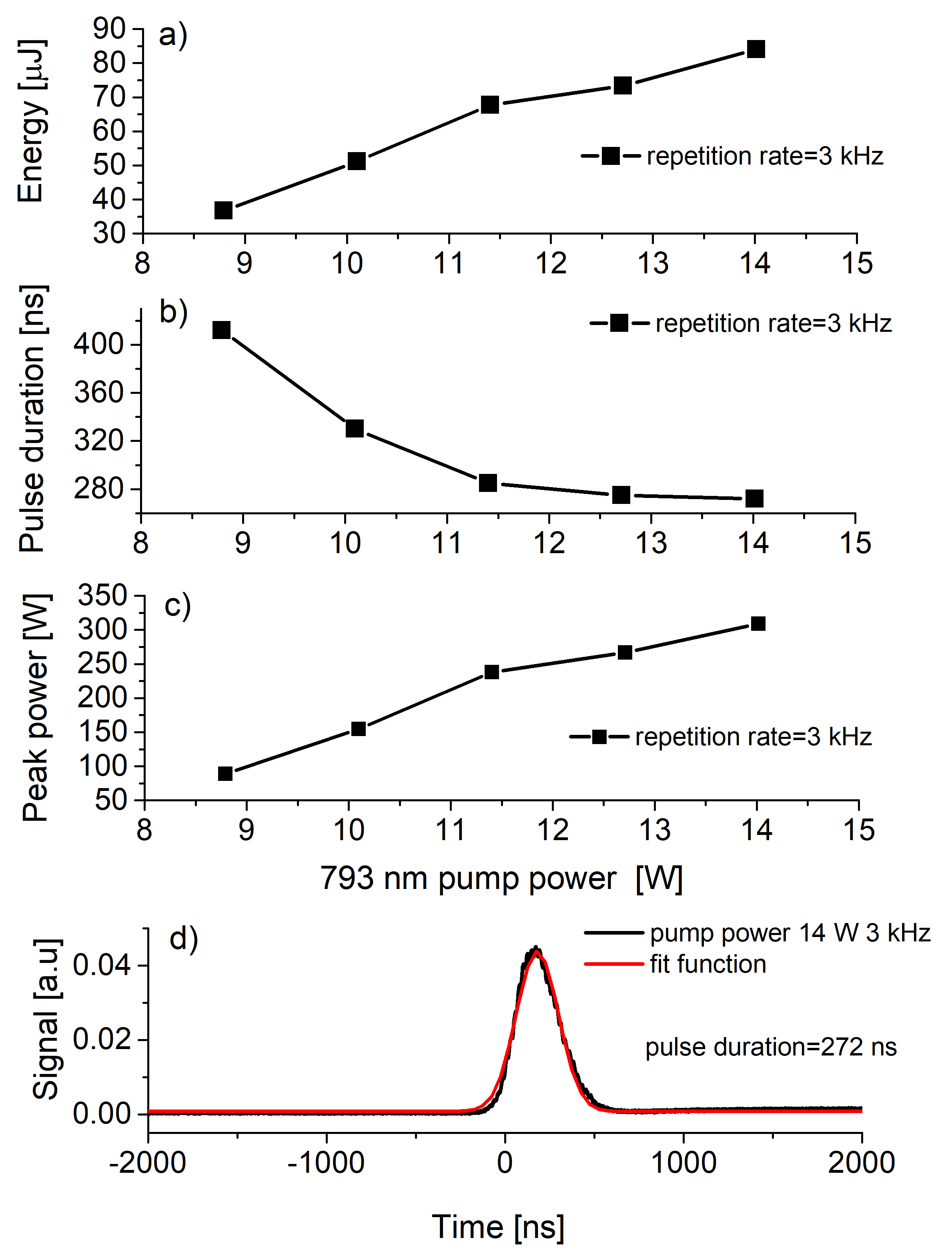
Fig. 6(a) presents the output energy as a function of pump power, recorded at a repetition rate of 3 kHz. These results demonstrate that the laser output pulse achieved the maximum energy of 84 μJ. Fig. 6(b) illustrates in turn, the dependence of pump power on pulse duration, measured at 3 kHz. From these results it can be noted that the shortest recorded pulse duration at this repetition rate of 3 kHz was 272 ns, corresponding to approximately three cavity round-trip times. Fig. 6(c) illustrates the peak power evolution with respect to pump power. These results show that at a 3 kHz repetition rate, the utmost peak power of 309 W can be achieved with a 14 W pump power. Finally, Fig. 6(d) shows the measured shortest pulse shape of 272 ns. As expected, the highest output energy and shortest pulse duration were recorded at a repetition rate of 3 kHz.
Fig. 6.(a) Pulse energy. (b) Pulse duration. (c) Peak power as a
function of pump power. (d) The shortest pulse shape
was measured at 3 kHz.
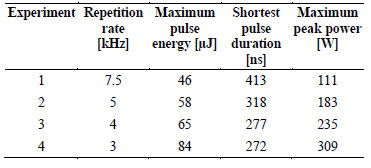
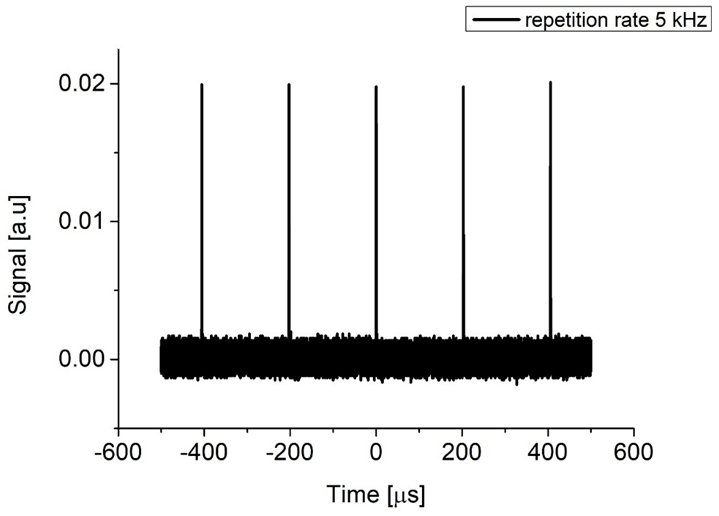
Table 2 summarises the highest results achieved at various repetition rates. Fig. 7 shows the measured experimental pulse train at a repetition rate of 5 kHz for an incident pump power of 10.82 W. As shown in Fig. 7, the Qswitched laser operates stably.
Fig. 7.Recorded typical pulse train at a pulse repetition
frequency of 5 kHz, measured for an incident pump
power of 10.82 W.
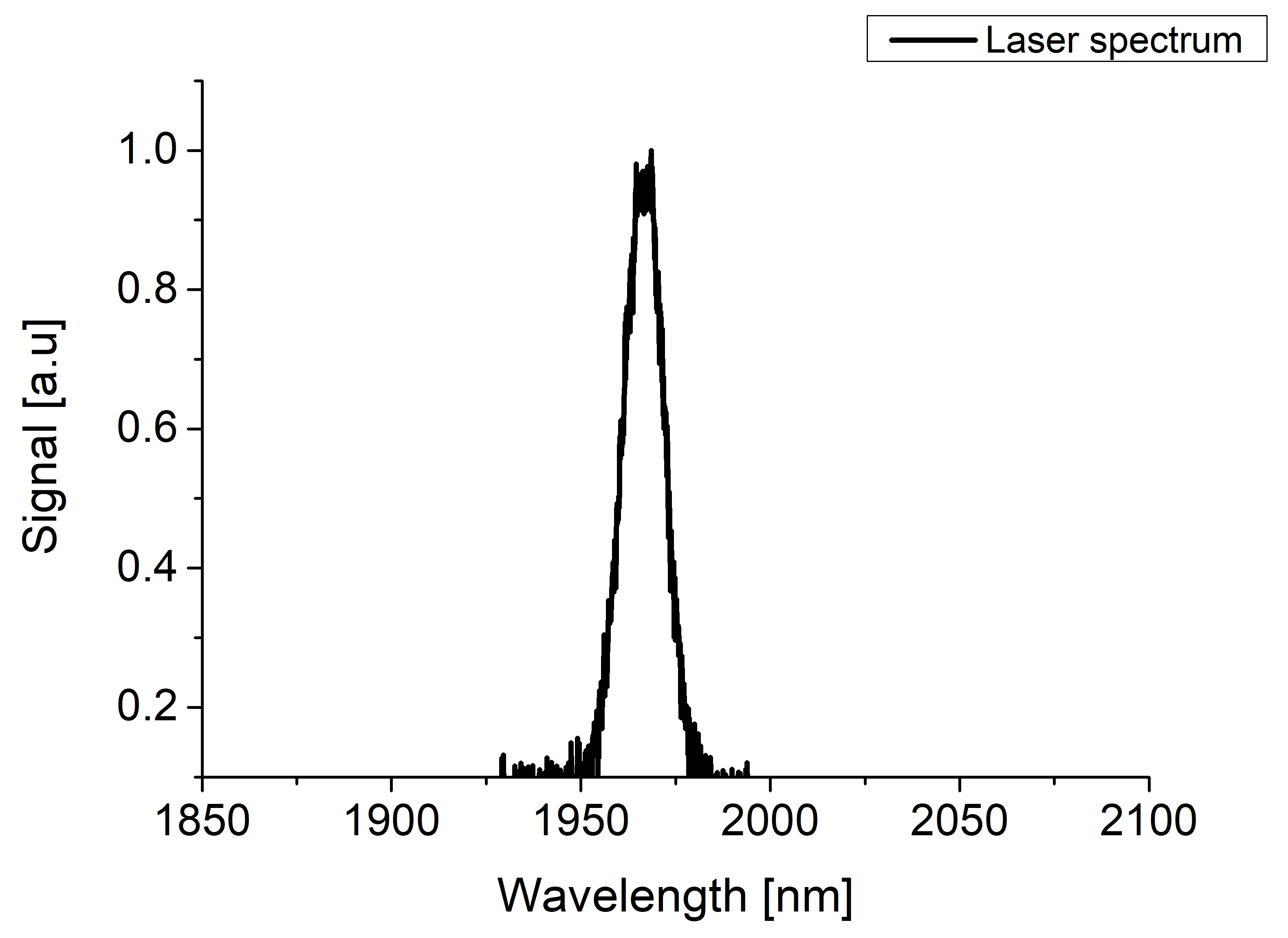
Fig. 8 shows the measured laser spectrum produced by the Tm3+-doped Qswitched multi-ring fibre laser. The spectrum was measured at a pulse repetition frequency of 5 kHz and an incident pump power of 10.82 W. The laser emitted light at a wavelength of approximately 1.966 μm with a 3 dB spectral bandwidth of 12 nm. The Qswitched laser operates in a free-running regime without any spectral selective elements, such as a fibre Bragg grating (FBG) or a bulk diffraction grating.
Fig. 8.Measured laser spectrum generated by the Qswitched
Tm3+-doped multi-ring fibre laser. The spectrum was
recorded at a pulse repetition frequency of 5 kHz and
an incident pump power of 10.82 W.
Conclusions
This paper presents a practical realisation of an actively Qswitched fibre laser with an operating wavelength of 1.96 μm. The laser has been realised using a novel Tm3+‑doped multi-ring fibre fabricated using the MCVD-CDT technology. The Qswitched laser dynamics was investigated at selected repetition rates and pump powers. The results show that the developed laser emitted pulses with an output energy of 84 μJ and a duration of 272 ns (corresponding to a peak power of 309 W) at a repetition rate of 3 kHz. The presented results show that the designed and fabricated Tm3+-doped multi-ring fibre is a promising solution for generating high-output pulse energy and high-peak-power pulses near a 2 μm wavelength. Further work will focus on increasing the doping level of the Tm3+-doped multi-ring fibre, which should result in a shorter cavity length, generating shorter pulse durations and higher peak powers.
Authors’ statement
Research concept and design, Ł.S., S.S., P.M., M.K., D.D.; collection and/or assembly of data, Ł.S., Ł.P., M.P., P.M., M.K., M.Ł., W.P., D.D.; data analysis and interpretation, Ł.S., Ł.P., M.P., P.M., M.K., M.Ł., S.L., W.P., D.D.; writing the article, Ł.S., S.S., P.M.; critical revision of the article, M.K., S.L., D.D.; final approval, M.K., S.L., S.S., D.D.
Acknowledgements
The research project was funded by the National Science Centre (Poland) granted based on the decision
no. UMO-2020/37/B/ST7/03094.
References
Shi, W., Fang, Q., Zhu, X., Norwood, R. A. & Peyghambarian, N. Fiber lasers and their applications [Invited]. Appl. Opt. 53, 6554–6568 (2014). https://doi.org/10.1364/AO.53.006554
Scholle, K., Lamrini, S., Koopmann, P. & Fuhrberg, P. 2 µm Laser Sources and Their Possible Applications. in Frontiers in Guided Wave Optics and Optoelectronics (ed. Pal, B.) (IntechOpen, 2010). https://doi.org/10.5772/39538
Sincore, A., Bradford, J. D., Cook, J., Shah, L. & Richardson, M. C. High average power thulium-doped silica fiber lasers: Review of systems and concepts. IEEE J. Sel. Top. Quantum Electron. 24, 1–8 (2018). https://doi.org/10.1109/JSTQE.2017.2775964
Jackson, S. D. Cross relaxation and energy transfer upconversion processes relevant to the functioning of 2 μm Tm3+-doped silica fibre lasers. Opt. Commun. 230, 197–203 (2004). https://doi.org/10.1016/j.optcom.2003.11.045
Scholle, K., Heumann, E. & Huber, G. Single mode Tm and Tm,Ho:LuAG lasers for LIDAR applications. Laser Phys. Lett. 1, 285 (2004). https://doi.org/10.1002/lapl.200410067
Scott, N. J., Cilip, C. M. & Fried, N. M. Thulium fiber laser ablation of urinary stones through small-core optical fibers. IEEEJ. Sel. Top. Quantum Electron. 15, 435–440 (2009). https://doi.org/10.1109/JSTQE.2008.2012133
Barnes, N. P., Walsh, B. M., Reichle, D. J., DeYoung, R. J. & Jiang, S. Tm:germanate fiber laser: Tuning and Q-switching. Appl. Phys.B 89, 299–304 (2007). https://doi.org/10.1007/s00340-007-2794-4
Fuhrberg, P., Ahrens, A., Schkutow, A. & Frick, T. 2.0 μm laser transmission welding. PhotonicsViews 17, 64–68 (2020). https://doi.org/10.1002/phvs.202000013
Ghosh, A., Roy, A. S., Chowdhury, S. D., Sen, R. & Pal, A. All-fiber tunable ring laser source near 2 μm designed for CO2 sensing. Sens. Actuators B: Chem. 235, 547–553 (2016). https://doi.org/10.1016/j.snb.2016.05.128
Hamperl, J. et al. High energy parametric laser source and frequency-comb-based wavelength reference for CO2 and water vapor DIAL in the 2 µm region: Design and pre-development experimentations. Atmosphere 12, 402 (2021). https://doi.org/10.3390/atmos12030402
Eichhorn, M. Development of a high-pulse-energy Q-switched Tm-doped double-clad fluoride fiber laser and its application to the pumping of mid-IR lasers. Opt. Lett. 32, 1056–1058 (2007). https://doi.org/10.1364/OL.32.001056
Swiderski, J. & Michalska, M. High-power supercontinuum generation in a ZBLAN fiber with very efficient power distribution toward the mid-infrared. Opt. Lett. 39, 910–913 (2014). https://doi.org/10.1364/OL.39.000910
Lenski, M. et al. In-band pumped, Q-switched thulium-doped fibre laser system delivering 140 W and 7 mJ pulse energy. Opt. Lett. 49, 4042–4045 (2024). https://doi.org/10.1364/OL.528330
Chernysheva, M. et al. High power Q-switched thulium doped fibre laser using carbon nanotube polymer composite saturable absorber. Sci. Rep. 6, 24220 (2016). https://doi.org/10.1038/srep24220
Frith, G. P. & Lancaster, D. G. Power scalable and efficient 790-nm pumped Tm3+-doped fiber lasers. Proc. SPIE 6102, 610208 (2006). https://doi.org/10.1117/12.660932
Eichhorn, M. & Jackson, S. D. High-pulse-energy actively Q-switched Tm3+-doped silica 2 μm fibre laser pumped at 792 nm. Opt. Lett. 32, 2780–2782 (2007).https://doi.org/10.1364/OL.32.002780
Wadsworth, W. J., Percival, R. M., Bouwmans, G., Knight, J. C. & Russell, P. St. J. High power air-clad photonic crystal fibre laser. Opt. Express 11, 48–53 (2003). https://doi.org/10.1364/OE.11.000048
Stutzki, F., Jansen, F., Jauregui, C., Limpert, J. & Tünnermann, A. 2.4 mJ, 33 W Q-switched Tm-doped fiber laser with near diffraction-limited beam quality. Opt. Lett. 38, 97–99 (2013). https://doi.org/10.1364/OL.38.000097
Schneider, J. et al. High-energy nanosecond pulse extraction from a Tm3+-doped photonic crystal fiber laser emitting at 2050 nm with
narrow linewidth. Opt. Express 32, 32309–32321 (2024). https://doi.org/10.1364/OE.531146
Miluski, P. et al. Tm3+/Ho3+ profiled co-doped core area optical fibre for emission in the range of 1.6–2.1 µm. Sci. Rep. 13, 13963 (2023). https://doi.org/10.1038/s41598-023-41097-2
Miluski, P. et al. Tm3+ doped multi-ring profile single-mode fiber laser for application in the eye-safe spectral range. J. Light. Technol. 42, 3844–3851 (2024). https://doi.org/10.1109/JLT.2024.3364154
Sujecki, S. Numerical analysis of Q-switched erbium ion doped fluoride glass fibre laser operation including spontaneous emission.
Schneider, J., Forster, P., Romano, C., Eichhorn, M. & Kieleck, C. Investigation of the pulse energy limits of actively Q-switched polarization-maintaining Tm3+-doped fiber lasers. OSA Contin. 4, 1577–1586 (2021). https://doi.org/10.1364/OSAC.423812