Applied sciences

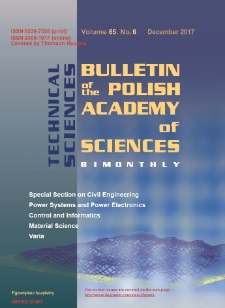
Bulletin of the Polish Academy of Sciences Technical Sciences

Content

Bulletin of the Polish Academy of Sciences Technical Sciences | Early Access

Download PDF Download RIS Download Bibtex

Abstract

The paper focuses on the stabilization of fractional variable-order linear discrete-time systems with the Caputo difference operator of the convolution type. The Z-transform is a powerful and widely used tool for analyzing the stability of linear control systems. It provides insight into the behavior of the system’s solutions, particularly in the discrete-time domain. Given the fundamental role of stability in control theory and its applications in automation, a central objective is the stabilization of control systems. Stabilization refers to the process of determining a suitable state-feedback law that ensures the asymptotic stability of the system. In situations where the open-loop system is not asymptotically stable, stability can often be achieved by introducing a properly designed state-feedback controller. This controller is typically constructed based on the eigenvalue spectrum of the closed-loop system matrix. The conditions for asymptotic stability, derived via the Z-transform approach, provide practical criteria for eigenvalue placement and serve as a guide for ensuring the desired system behavior.
Go to article

Authors and Affiliations

Dorota Mozyrska
ORCID: ORCID
Malgorzata Wyrwas
ORCID: ORCID
Download PDF Download RIS Download Bibtex

Abstract

State-of-the-art deep reinforcement learning (DRL) techniques such as Soft Actor-Critic (SAC), Twin Delayed Deep Deterministic Policy Gradient (TD3), and Deep Deterministic Policy Gradient (DDPG) have demonstrated promising results in developing control strategies. In this study, we propose ES-SAC, a hybrid learning framework that integrates Evolutionary Strategy (ES) with the SAC algorithm to enhance humanoid robot locomotion control. ES-SAC leverages the global search capabilities of evolutionary algorithms and the sample efficiency and convergence properties of DRL. The performance of the ES-SAC agent was evaluated on a bipedal robot simulation and compared to other hybrid methods employing deterministic agents, including ES-TD3 and ES-DDPG. The ES-SAC agent exhibited superior average reward performance and a more stable learning process. In contrast, the ES-TD3 agent achieved faster course completion but exhibited control instabilities. This study also highlights the importance of physical and behavioral metrics –such as torque efficiency, horizontal and vertical deflection, and Q0 values– in assessing the reliability of DRL-based locomotion control. Our findings suggest that relying solely on cumulative reward for evaluation can be misleading, underscoring the need for a more comprehensive analysis in future research.
Go to article

Authors and Affiliations

Mustafa Ayyıldız
Övünç Polat
Download PDF Download RIS Download Bibtex

Abstract

Vehicle detection in the road area serves as the basis for various other studies, including vehicle type identification, vehicle counting, and traffic violation detection. Two models that have been successfully implemented were YOLOv2 and YOLOv3, but both still have limitations in detecting small objects and require significant computational resources. YOLO11 features enhanced accuracy and computational efficiency. Large variant models such as YOLO11m, YOLO11l, and YOLO11x achieved higher accuracy but often come with a substantial decrease in inference speed. Therefore, this study proposed modifying the YOLO11 architecture by removing two convolutional blocks and three C3k2 Blocks to increase detection speed without sacrificing accuracy. The proposed method is applied to 2 datasets: low-traffic and high-traffic highways. The test results showed that the proposed method could reduce the inference time by 19% on low-traffic highways and 12% on high-traffic highways. In addition, the proposed method can increase the Average Precision (AP) by 0.004 on low-traffic highways and 0.003 on hightraffic highways. Therefore, the proposed method is better suited for real-time car detection on highways.
Go to article

Authors and Affiliations

Sutikno
Aris Sugiharto
Retno Kusumaningrum
Download PDF Download RIS Download Bibtex

Abstract

3D-printed concrete (3DPC) cures under non-standard conditions due to the absence of formwork and external curing, which leads to rapid moisture evaporation. Combined with a unique mix design—characterized by high binder content and reduced water-to-cement ratio—this results in significantly different shrinkage behavior compared to conventional concrete, particularly at early ages. Measuring shrinkage in 3D-printed elements is technically challenging and often technically challenging, which emphasizes the need for reliable predictive models. Since well-established models exist for traditional concrete, this study focuses on estimating updated coefficient values for three widely used models—Eurocode 2 (EC2), RILEM B4, and ACI 209-92—to enable their application to 3DPC. Experimental shrinkage measurements were performed on multilayer printed specimens consisting of six layers, each with a 40×10 mm cross-section and a total length of 500 mm. Both noncontact laser sensors and LVDT devices were used. Model parameters were estimated using nonlinear regression techniques. The results show that all three models can accurately describe the shrinkage behavior of 3DPC after recalibration, with coefficients of determination exceeding 0.94. This confirms the potential of adapting existing shrinkage models—originally developed for conventional concrete—to the specific characteristics of 3D-printed materials.
Go to article

Authors and Affiliations

Karol Federowicz
Marcin Hofmann
Nikola Tošić
Paweł Sikora
Download PDF Download RIS Download Bibtex

Abstract

To address the problem of reduced comfort caused by vehicle tilt for hilly tractor driver, a novel seat posture omnidirectional levelling system is designed, and an omnidirectional rapid levelling control strategy (QBP-PID) is proposed, which fuses Q-learning, Back Propagation (BP) neural network, and Proportional-Integral-Derivative (PID) control. Firstly, an omnidirectional levelling system for seat posture is designed based on kinematic principles. On this basis, a model for the omnidirectional levelling system is established using valve-controlled hydraulic cylinder principles. Subsequently, addressing the challenge of difficult parameter tuning for the levelling system's PID control, a multi-level parameter update strategy employing QBP-PID is proposed for rapid omnidirectional levelling control. Simulation results show that under QBP-PID control, the 15° lateral levelling time is 2.98 s with an overshoot of 0.32°; The longitudinal levelling time at 20° is 3.41 s with an overshoot of 0.95°. Compared to BP-PID and PID, the lateral levelling time is reduced by 18.13% and 27.66% respectively, while the longitudinal levelling time decreased by 17.63% and 31.6% respectively. The superiority of the QBP-PID omnidirectional rapid levelling control strategy has been demonstrated.
Go to article

Authors and Affiliations

Chen Li
ORCID: ORCID
Junjiang Zhang
ORCID: ORCID
Shuaishuai Ge
Mengnan Liu
Liyou Xu
Xianghai Yan
Download PDF Download RIS Download Bibtex

Abstract

The article presents the concept of dual-core bit.WORD programmable logic controller central processing unit. The idea is based on the use of two microprocessor cores, one fast and low-power for bit operations and one computationally efficient for word operations. The main contribution is a comparison of efficiency of the bit core and the word core. The paper presents results for logic utilization, core clock frequency and power consumption in order to undertake further implementation work related to the development of the bit.WORD unit.
Go to article

Authors and Affiliations

Bartłomiej Jekot
Błażej Korzuch
Fabian Oles
Paweł Lempa
Oskar Strajer
Rafał Przechowski
Robert Czerwiński
Mirosław Chmiel
Download PDF Download RIS Download Bibtex

Abstract

A hybrid field-circuit model of a single-phase shell-type transformer that incorporates a three-dimensional analysis of the magnetic field in a transformer with beveled edges of the magnetic shunt. The finite element method (FEM) was employed, and the expressions for computing the magnetic field's differential and integral parameters were provided. For various positions of the magnetic shunt, the self- and mutual inductances of the transformer windings are calculated. Their values are stored in matrix form and serve as input data for the transformer circuit model. The differential equations governing the operation of a transformer with a movable magnetic shunt are formulated using Lagrangian methods. They were applied to the transformer's T-type equivalent circuit. This simulation model has been verified experimentally. Comparison of the measured and simulated time-course currents yields a good agreement. Furthermore, three electric arc models have been introduced to assess the applicability of the proposed approach under nonlinear loading. The results confirm that the mathematical model accurately predicts the transformer transients across a range of operating scenarios. Moreover, the presented simulation offers potential for broader application to other electromagnetic objects.
Go to article

Authors and Affiliations

Bronisław Tomczuk
ORCID: ORCID
Dawid Wajnert
Dawid Weber
Download PDF Download RIS Download Bibtex

Abstract

This article proposes a practical and flexible modelling approach for a five-phase squirrel-cage induction motor that explicitly accounts for the shape of the air-gap magnetic flux density distribution. Two motor configurations are analysed and compared: one with a sinusoidal air-gap flux distribution and another with a quasi-trapezoidal distribution obtained through third-harmonic voltage injection. The proposed modelling framework is based on vector space decomposition into two orthogonal mathematical planes and is implemented using standard components available in the PLECS simulation environment. Finite element analysis is used to support the selection of model parameters and to evaluate the influence of harmonic injection on the air-gap flux distribution. The developed models are verified by simulations and laboratory experiments carried out on the five-phase induction motor. The results confirm that a quasi-trapezoidal air-gap flux distribution enables the second vector plane to contribute to torque production and leads to improved magnetic flux utilisation. The proposed approach provides a clear and flexible tool for the analysis and development of control strategies for five-phase induction motor drives.
Go to article

Authors and Affiliations

Krzysztof Blecharz
ORCID: ORCID
Roland Ryndzionek
ORCID: ORCID
Download PDF Download RIS Download Bibtex

Abstract

The article presents the results of research on the influence of a crumb rubber additive on the mechanical properties f a colliery spoils composite. The analysis covered compaction parameters (optimum moisture content, maximum dry density of solid particles) and shear strength parameters (angle of internal friction, cohesion) for composites containing 5%, 10%, and 20% crumb rubber. Compaction parameters were determined using the Proctor apparatus at a compaction energy of 0.59  J⋅cm⁻³. Shear strength parameters were measured in a direct shear apparatus on samples with a cross-sectional dimension of 12 × 12 cm and a height of 2.9 cm. Soil samples were sheared with and without water saturation at a rate of 0.1 mm⋅min⁻¹ until 15% horizontal deformation was achieved. The results indicate that the addition of crumb rubber decreases the maximum dry density of solid particles and increases the optimum moisture content, thereby impairing the material's compactibility. For shear strength, complex relationships were observed: a small addition of crumb rubber (5–10%) improves cohesion by up to 30%, while a higher content (20%) significantly reduces it, along with the angle of internal friction. Water saturation of the samples further decreases the strength parameters, particularly with large crumb rubber additions. The optimal crumb rubber addition ranged from 5 to 10%, yielding the best values of the angle of internal friction and cohesion. The research results highlight the high potential for using colliery spoils composites with crumb rubber in earthworks, provided that the component proportions are appropriately selected.
Go to article

Authors and Affiliations

Robert Wojtaszek
Andrzej Gruchot
ORCID: ORCID

Instructions for authors

Guide for Authors

https://www.editorialsystem.com/bpasts/journal/for_authors/

Fees for open access publications in Bulletin of the Polish Academy of Sciences Technical Sciences:

2000 PLN (approx. 500 EUR) - up to 8 pages of the journal format and mandatory over-length charges of 250 PLN (approx. 60 EUR) per page (see the above link with instructions for Authors for details)

Guide for Reviewers

https://www.editorialsystem.com/bpasts/journal/for_reviewers/

Call for Papers

https://www.editorialsystem.com/bpasts/journal/call_for_papers/

Guide for Guest Editors

https://www.editorialsystem.com/editor/bpasts/journal/page1/

Additional info

NEW PUBLICATION FEES
Articles submitted by December 31st, 2024: existing fee: 1500 PLN (and mandatory over-length charges of 230 PLN per page)
Articles submitted from January 1st, 2025: new fee: 2000 PLN (approx. 500 EUR- depending on the exchange rate) - a flat fee per paper up to 8 pages of the journal format (each additional page will be charged an additional 250 PLN).

This page uses 'cookies'. Learn more